Startup offers free home cleaning—if it can record it all for robot training
MicroAGI, a German artificial intelligence startup focused on embodied robotics, launched an unconventional service on May 28th that offers New York City residents complimentary residential cleaning in exchange for allowing professional cleaners equipped with cameras to document their work. The arrangement represents a distinctive approach to data collection in the burgeoning field of household robotics, where the scarcity of high-quality training footage has emerged as a significant bottleneck. The startup's Shift app facilitates these transactions by connecting Manhattan residents seeking domestic help with cleaning professionals who capture their actions through wearable cameras, with the collected video data subsequently flowing into MicroAGI's machine learning infrastructure. The service requires participating households to provide access instructions, contact information, and permission for approximately two-hour recording sessions, positioning the arrangement as a voluntary exchange between data access and tangible household services. This initiative crystallizes an emerging business model wherein AI development firms compensate participants not through conventional monetary payment but rather through provision of valuable services, effectively monetizing human labor patterns as machine learning fuel.
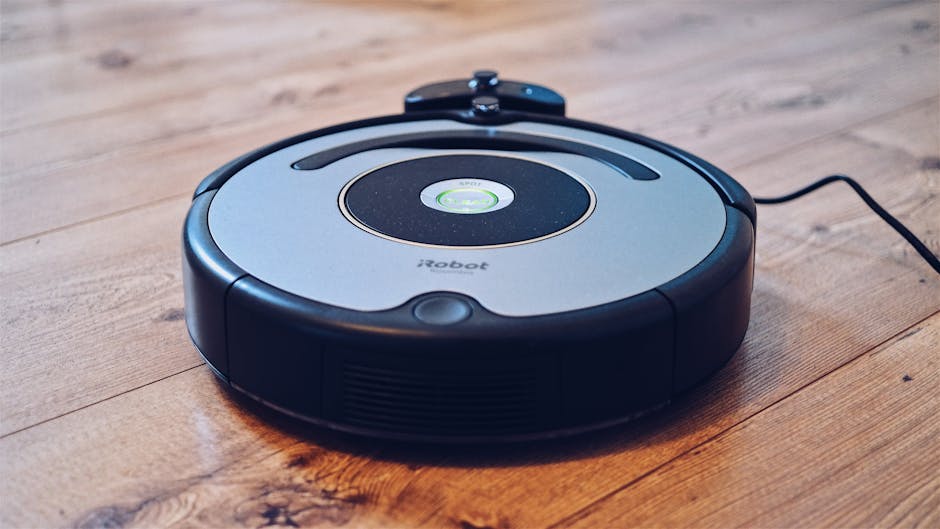
The broader context of this development reflects the contemporary challenges facing companies pursuing autonomous household robotics, an aspirational sector that has repeatedly overpromised and underdelivered across multiple decades. Prior attempts to deploy domestic robots, from iRobot's Roomba to various humanoid prototypes, have succeeded primarily in limited, repetitive tasks rather than achieving the flexible, adaptive intelligence required for genuine household assistance. The fundamental technical barrier remains unchanged: machine learning systems, particularly those designed to perform complex, unstructured physical tasks in variable domestic environments, require extensive annotated video data showing human performance of these exact tasks. High-quality first-person perspective footage proves especially valuable because it captures the decision-making process and spatial reasoning that humans unconsciously employ during cleaning work. Previous data collection efforts have relied on expensive hiring of paid participants, expensive motion-capture studio environments, or synthetic simulations that fail to capture real-world complexity. MicroAGI's model attempts to circumvent these prohibitive costs by packaging data collection as a consumer service, transforming the traditional relationship between data subjects and AI companies. This timing proves significant because major technology firms including OpenAI, Google, and others have recently intensified focus on embodied AI systems, signaling that the robotics sector may finally possess sufficient computational infrastructure to transform raw video footage into functional robotic behavior.
The specific mechanics of MicroAGI's service reveal careful attention to practical implementation despite its seemingly experimental nature. The Shift app specifies that cleaning sessions extend approximately two hours, suggesting sessions of sufficient length to capture diverse cleaning scenarios including kitchen sanitation, bathroom maintenance, floor treatment, and surface organization. The startup has successfully marketed this proposition through social media platforms including X and LinkedIn, employing sophisticated promotional content featuring cultural touchstones like "Empire State of Mind" to generate engagement specifically among New York City technologically-aware demographics. The website language strategically frames the arrangement as mutually beneficial: "free, trusted professional house cleaners" addresses consumer desire for service quality while the formulation "to help train the next generation of household robots" appeals to forward-thinking sensibilities. The data collection mechanism itself remains notably transparent compared to algorithmic data harvesting that users encounter elsewhere, potentially explaining why residents might voluntarily consent to residential recording.
For technology professionals and industry observers, this development holds immediate practical significance that extends beyond mere novelty. The release of robust household robot systems depends entirely on the availability of the kind of granular, real-world behavioral data that MicroAGI now actively collects. Unlike autonomous vehicles, which have benefited from millions of miles of operational driving data, household robots lack equivalent real-world training material. Each participating New York household essentially becomes a training ground for embodied AI systems, with two-hour recording sessions generating thousands of data points regarding human decision-making in specific spatial contexts. The scalability potential deserves emphasis: if MicroAGI expands this model beyond New York to additional cities, or if competitors adopt similar strategies, the volume of accessible domestic labor data could accelerate development timelines substantially. For households participating, the calculus presents genuine value proposition despite privacy considerations, since professional cleaning services in Manhattan command premium pricing, typically exceeding $150-200 for the two-hour sessions the startup offers without charge. This arrangement potentially redistributes wealth from capital-intensive AI development toward service workers and households, though questions persist regarding whether cleaners themselves receive compensation and how equity in the resulting robotic systems might be allocated.
This initiative exemplifies a broader technological pattern wherein AI development has progressively shifted toward outsourced, distributed data collection models rather than centralized corporate infrastructure. The strategy mirrors approaches previously employed in crowdsourced machine learning, from Amazon's Mechanical Turk platform to more recent ventures in distributed annotation. What distinguishes MicroAGI's model is its integration of data collection into genuinely useful consumer services rather than treating data collection as primary purpose with token compensation. This represents maturation of the AI business model ecosystem, acknowledging that voluntary participation requires tangible value exchange rather than minimal payment. The approach also reflects confidence in embodied AI's near-term viability—the company would not invest in this infrastructure without genuine belief that household robot systems will achieve market deployment within timeframes justifying current investment. Furthermore, the choice of New York City as launch location signals targeting of affluent, technologically sophisticated populations where service preferences are highest and data privacy attitudes potentially most permissive. The pattern connects to broader consolidation of AI capabilities among well-capitalized firms capable of developing novel market-creation strategies alongside fundamental research, distinguishing leading competitors from less innovative participants.
Industry observers should monitor MicroAGI's expansion trajectory throughout 2024 and into 2025, specifically tracking whether the company extends Shift to additional metropolitan areas including Los Angeles, San Francisco, or Boston. The growth rate of the program directly indicates whether the free service model attracts sufficient household participation to deliver meaningful training data, and expansion announcements would signal successful proof-of-concept validation. Simultaneously, major robotics players including Boston Dynamics, Tesla (through its Optimus initiative), and Figure AI should be monitored for adoption of similar data collection strategies, which would indicate industry-wide recognition of the model's validity. The arrival of commercially available household robots priced for typical consumer adoption within the next 24-36 months depends substantially on access to exactly this category of training material, making MicroAGI's data pipeline a critical competitive advantage if successfully scaled. Additionally, watch for regulatory responses from New York City and other jurisdictions regarding residential recording in private spaces, as privacy advocates may challenge the arrangement despite voluntary nature, potentially constraining the model's expansion.