Over 13L people join Annamalai’s 'We the Leaders' movement within 24 hours of its launch
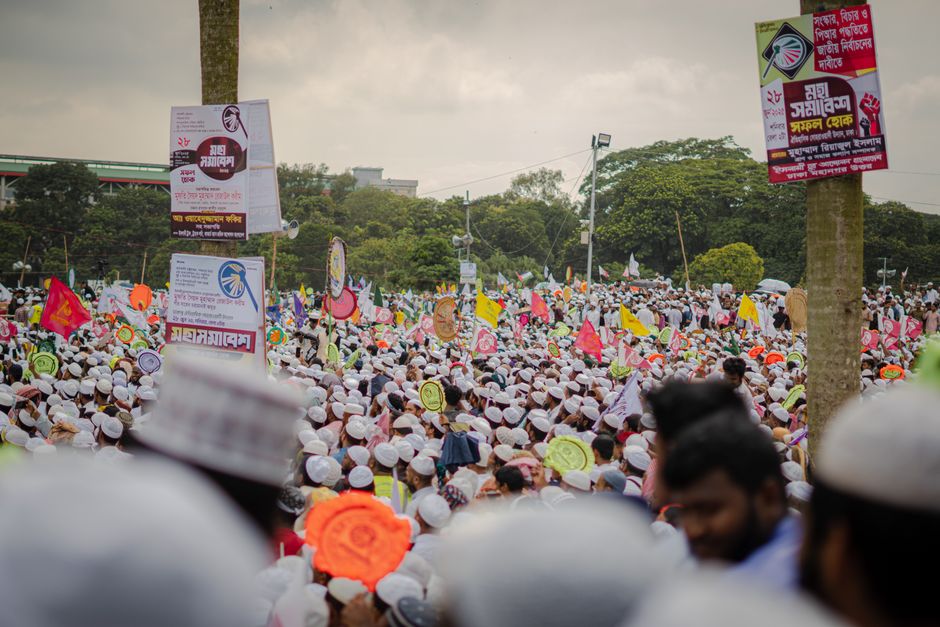
K. Annamalai's recently launched "We the Leaders" movement achieved a significant mobilisation milestone within its opening 24 hours, attracting over 1.3 million registrations across Tamil Nadu. The initiative, unveiled as a decentralised collective movement rather than a conventional political party structure, has positioned itself as a response to what its founder characterises as a substantive gap in the state's political landscape. This rapid accumulation of participant numbers during the movement's nascent phase signals noteworthy organisational momentum and raises pertinent questions about voter sentiment in one of India's most politically volatile and significantly populated states. The scale of registration activity underscores the potential appetite for alternative political formations in Tamil Nadu, a state where electoral competition has historically centred around established regional players and their respective ideological constituencies. Annamalai's framing of the movement as a departure from traditional hierarchical political structures represents a deliberate strategic positioning designed to appeal to constituencies potentially alienated from conventional party mechanisms.
Tamil Nadu's political terrain has undergone considerable transformation over the past decade, characterised by fragmentation of traditional voting blocs and shifting allegiances among key demographic groups. The state has historically maintained distinct political identities, with the Dravida Munnetra Kazhagam and All India Anna Dravida Munnetra Kazhagam dominating electoral outcomes for extended periods, supplemented by regional players and national formations seeking parliamentary representation. The emergence of movements claiming decentralised structures responds to broader patterns observable across Indian politics, where conventional party hierarchies face increasing scrutiny regarding internal democratic processes and grassroots representation. Tamil Nadu's electorate, characterised by relatively high literacy rates and historical engagement with ideologically-grounded politics, has demonstrated receptiveness to political formations presenting alternative governance philosophies. The timing of "We the Leaders" launch occurs within a specific political cycle, where mid-term assessments of existing governance structures create space for alternative formations to articulate their positioning. This context illuminates why Annamalai's emphasis on decentralisation resonates as potentially significant rather than merely rhetorical.
The movement recorded over 1.3 million registrations within the inaugural 24-hour period following its official launch, representing a quantifiable indicator of mobilisation capacity. This registration figure encompasses participants across multiple districts and demographic categories within Tamil Nadu, suggesting geographical distribution rather than concentrated support within urban metropolitan areas alone. The decentralised structure positioning distinguishes this initiative from conventional political party launches, which typically rely on hierarchical organisational frameworks and established party machinery. Annamalai's explicit articulation that the movement represents a departure from individual political ambition reflects a communications strategy acknowledging public scepticism toward personalised political projects. The participant response demonstrates measurable traction during an initial phase when organisational infrastructure remains nascent and institutional legitimacy remains unproven through electoral participation.
For Tamil Nadu's electorate, this development presents tangible implications regarding available political choices during forthcoming electoral cycles. The movement's emergence occurs within a state where voter turnout consistently exceeds national averages, indicating engaged political participation among substantial population segments. Should the "We the Leaders" framework sustain organisational coherence and develop substantive policy platforms, it could fragment existing voter coalitions, potentially reshaping electoral mathematics in a state where victory margins have historically remained competitive. For constituencies dissatisfied with existing political formations, the availability of an alternative formation claiming decentralised decision-making structures provides practical options previously unavailable. The movement's registered participant base represents potential ground-level organisational capacity during election campaigns, translating mobilisation into conventional electoral activities. For Tamil Nadu's political analysts and observers, the registration surge requires assessment regarding whether initial participation translates into sustained engagement or represents ephemeral enthusiasm during movement inception phases.
The emergence of "We the Leaders" reflects broader patterns within Indian electoral politics where conventional party structures encounter challenges regarding perceived democratisation, responsive governance, and grassroots inclusion. Movements emphasising decentralised decision-making architecture have gained prominence across multiple Indian states, often articulating discontent with centralised party bureaucracies and dynastic succession patterns. Tamil Nadu's specific trajectory demonstrates how these national trends manifest within regional contexts, where distinctive political histories and institutional arrangements create unique conditions for alternative formations. The substantial registration numbers suggest that significant voter segments view existing political options as inadequately representing their preferences regarding governance approaches and policy priorities. This pattern aligns with observable shifts in Indian electoral behaviour, where voters increasingly demonstrate willingness to consider political formations lacking historical institutional presence or entrenched party machinery. The decentralised framing appeals strategically to constituencies historically sceptical of hierarchical party structures, potentially including educated urban voters, younger demographics, and communities perceiving marginality within existing party hierarchies.
Stakeholders should monitor specific organisational developments within the "We the Leaders" framework during subsequent months, particularly the movement's capacity to translate registrations into functional district-level and block-level structures. The functioning of any internal democratic mechanisms within the decentralised framework will determine whether the movement's initial positioning regarding grassroots decision-making translates into operational reality or remains aspirational rhetoric. Tamil Nadu's forthcoming electoral schedule will provide concrete testing grounds for the movement's capacity to mobilise registered participants into conventional political activity, including campaign participation and electoral turnout. Observers should assess whether established political formations respond to the movement's emergence through strategic repositioning or substantive policy adjustments. The movement's interaction with Tamil Nadu's existing media ecosystem and social networks will significantly influence sustained participant engagement beyond initial registration. Quantifiable indicators during the movement's subsequent development phases, including sustained registration growth, formalisation of internal structures, and electoral performance during local body elections preceding state assembly contests, will clarify whether this represents significant political reconfiguration or transient mobilisation phenomenon characteristic of emerging political formations.