How Turkey Hacked the Hair Transplant Industry
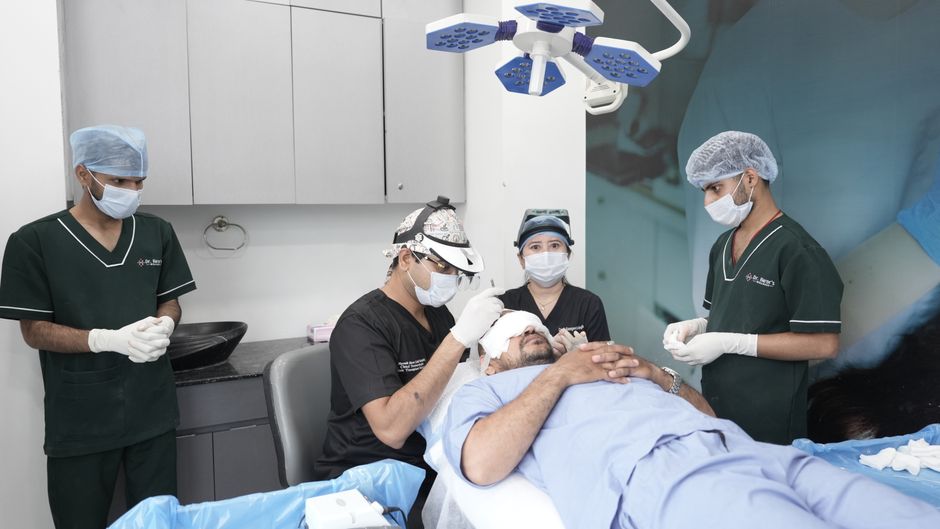
Turkey has transformed itself into the global epicenter of hair transplantation, commanding an estimated one billion dollar industry through methodical technological innovation and procedural refinement that extends far beyond simple surgical technique. The country's hair restoration sector now attracts hundreds of thousands of international patients annually, with Istanbul serving as the undisputed capital of the procedure, drawing medical tourists from across Europe, the Middle East, and North America. This extraordinary market dominance has emerged not through happenstance but through deliberate engineering advancement, particularly in specialized motorized instrumentation and algorithmic systems that have fundamentally altered how practitioners approach follicular unit extraction and implantation. The convergence of mechanical innovation with computational intelligence has created a competitive advantage that no other national healthcare sector has successfully replicated in this therapeutic domain, establishing Turkey as a technology leader in a field that conventional wisdom might associate exclusively with traditional surgical craft.
The origins of Turkey's hair transplant dominance trace to the late 1990s and early 2000s, when pioneering practitioners in Istanbul recognized that hair restoration represented an underserved market with significant profit potential and genuine patient demand. Previous decades had seen hair transplantation remain largely peripheral to mainstream medicine, confined to expensive private practices in Western nations and associated with crude, visibly artificial results. Turkish practitioners identified an opportunity to democratize access through operational efficiency and technological investment, establishing the institutional foundations that would eventually attract foreign investment and talent to Istanbul's emerging medical tourism infrastructure. The timing proved fortuitous, as growing social media connectivity beginning in the early 2010s enabled patients to document and share results globally, creating organic marketing channels that amplified demand across demographic segments previously resistant to surgical hair restoration. This convergence of technological readiness, entrepreneurial vision, and digital communication infrastructure positioned Turkey uniquely to capture market share precisely as global demand for cosmetic hair procedures entered exponential growth.
The technological specificity underlying Turkey's competitive advantage centers on two critical innovations that directly improve outcomes and reduce procedure duration. Specialized motorized extraction devices, engineered to operate at precise rotational speeds and torque specifications, enable practitioners to harvest hair follicles with measurably higher survival rates compared to manual extraction techniques historically dominant in Western practices. These motors, often custom-built by Turkish engineers or licensed from specialized manufacturers, allow for consistent graft extraction that minimizes transaction trauma to delicate follicular units, directly translating to superior post-transplant growth outcomes. Complementing mechanical advancement, machine learning algorithms now guide clinical decision-making regarding graft distribution, density calculations, and hairline design optimization, analyzing patient photographs and scalp characteristics to generate treatment protocols that deliver aesthetically superior results compared to physician-directed planning alone. These algorithmic systems, developed by Turkish medical technology startups and integrated into clinic management platforms, represent a fundamental shift from intuition-based aesthetics toward data-driven surgical planning, introducing reproducibility and quality standardization across thousands of procedures performed annually throughout the sector.
For technology-focused readers and healthcare innovation observers, Turkey's hair transplant trajectory illuminates crucial dynamics regarding how developing-world healthcare providers can leapfrog established competitors through targeted technological adoption rather than attempting to replicate Western institutional models wholesale. The industry demonstrates that specialized medical domains characterized by high patient volume, relatively standardized procedures, and clear metrics for success create ideal conditions for automation and algorithmic optimization, yet these opportunities remained largely unexploited in Western aesthetic surgery owing to entrenched clinical traditions and high-margin service delivery models that disincentivized innovation. Turkish practitioners, operating in a more cost-sensitive competitive environment, identified that motorized precision and machine learning analysis could simultaneously improve outcomes while reducing per-procedure labor requirements and thus procedure costs. This dynamic creates immediate financial incentive for technological investment, particularly when capital requirements for specialized equipment remain modest relative to potential market expansion. The real-world consequence has materialized as measurable quality improvement accompanied by procedure costs falling to one-third or one-quarter the Western equivalent, a pricing differential that has fundamentally restructured global patient flows in hair restoration and elevated Turkey's clinics to technological leadership in the therapeutic domain.
The broader significance of this trajectory extends substantially beyond follicle counting and extends into fundamental questions about where medical innovation originates in an increasingly globalized healthcare landscape. Turkey's success in hair transplantation challenges persistent assumptions that cutting-edge medical innovation remains concentrated within Western academic medical centers and pharmaceutical giants, demonstrating instead that specialized procedural domains with clear technological requirements can experience rapid advancement when practitioners in emerging markets recognize specific optimization opportunities and possess sufficient capital to pursue them. The pattern mirrors dynamics observable in other specialized medical domains, from orthopedic joint reconstruction to ophthalmic laser surgery, where concentration of high-volume practitioners in specific geographic clusters creates knowledge spillover and competitive pressure that accelerates technological adoption. Additionally, Turkey's approach illustrates how machine learning integration into clinical workflows proceeds most successfully not in highly complex multifactorial domains requiring extensive training data, but rather in relatively standardized procedures where outcomes exhibit measurable consistency and algorithmic predictions encounter minimal algorithmic ambiguity. This realization carries implications extending far beyond aesthetics, suggesting that incremental procedural specialization coupled with computational analysis represents a viable innovation pathway for healthcare sectors throughout the developing world to achieve technological leadership in particular niches rather than pursuing broader competition with entrenched Western providers.
Observers monitoring healthcare innovation and medical technology advancement should direct sustained attention toward three specific developments likely to crystallize Turkey's competitive position or alternatively to enable competitors gaining ground. First, regulatory clarification regarding machine learning algorithms in clinical decision-making remains incomplete across European Union jurisdictions and North American markets, with forthcoming FDA guidance expected by late 2024 or 2025 that may either accelerate international adoption of Turkish algorithmic systems or alternatively impose constraints that limit their exportability and thus reduce the country's technological advantage. Second, monitoring patient outcome data as published through Turkish medical associations and international aesthetic surgery societies will reveal whether the algorithmic and motorized systems employed domestically actually deliver superior results compared to conventional techniques when applied systematically across large patient cohorts, validation crucial for sustaining international credibility as western practitioners increasingly scrutinize Turkish procedures. Third, tracking venture capital investment flows into Turkish medical technology startups developing hair transplant innovations and adjacent aesthetic procedures will indicate whether entrepreneurial energy remains concentrated on hair restoration or whether engineering talent increasingly diversifies into other procedural domains, potentially fragmenting the innovative focus that has sustained Turkey's specific dominance in this sector. These developments will collectively determine whether Turkey represents a durable model for medical technology leadership in developing nations or alternatively a distinctive sector success unlikely to generalize across broader healthcare domains.