
A child's tooth and strange green stones uncover a 5,500-year-old mystery
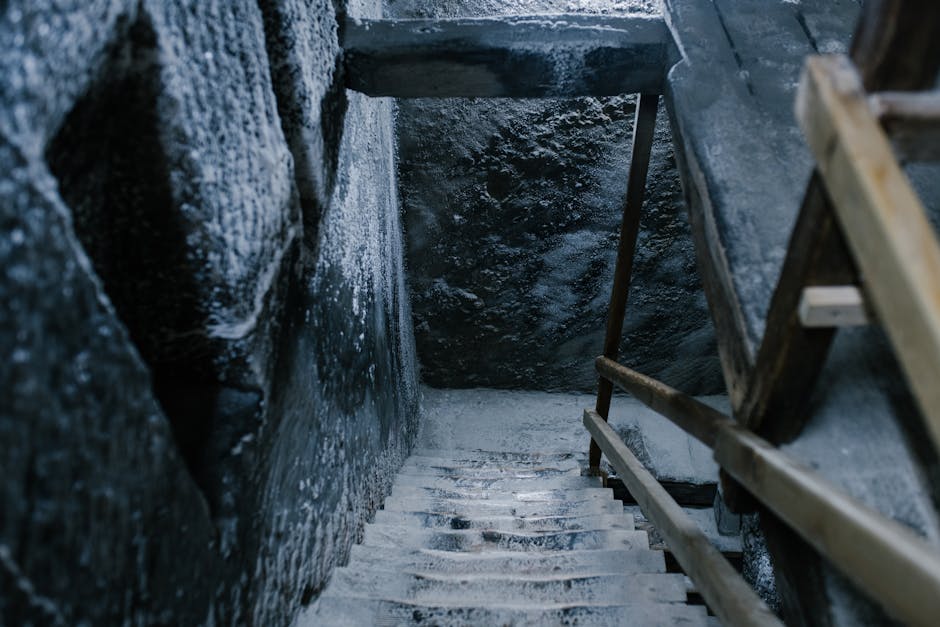
Researchers investigating a remote mountain cave system in the Pyrenees have identified what may constitute one of Europe's earliest high-altitude mining operations, with archaeological evidence suggesting repeated human occupation spanning multiple millennia. The discovery centres on a site that exhibits clear markers of systematic resource extraction, most notably the presence of distinctive green stones that indicate intentional mining activity at considerable elevation. Among the most significant findings is the recovery of a child's remains, a rare archaeological asset that opens new investigative pathways into prehistoric settlement patterns and mortality practices in these extreme environments. This identification fundamentally reshapes scholarly understanding of when and how ancient European populations ventured into inhospitable terrain, challenging assumptions about the temporal limits of organised resource-extraction activities in mountainous regions. The archaeological evidence accumulates during a period when most documented human activity concentrated in lowland valleys and coastal zones, making this Pyrenean site genuinely exceptional in its implications for reconstructing prehistoric economic organisation.
The discovery must be understood against the broader backdrop of European prehistory, particularly the evolution of mining practices across the Neolithic and Bronze Age periods. Previous scholarly consensus positioned significant mining operations as phenomena of later prehistory, typically associated with copper extraction in the third and second millennia before the present era. The assumption that ancient populations would undertake dangerous journeys to high-altitude locations purely for resource acquisition seemed implausible without demonstrable technological sophistication or pressing material necessity. However, accumulating evidence from multiple European sites has incrementally revised this framework, suggesting that prehistoric societies possessed greater organisational capacity and willingness to inhabit marginal environments than traditionally acknowledged. The Pyrenean cave site contributes substantially to this revisionist interpretation, providing concrete archaeological material that transforms theoretical debate into documented historical reality. For contemporary science journalism, this narrative carries particular resonance given current scholarly interest in understanding how human populations adapted to environmental constraints and organised collaborative labour systems long before written historical records emerged.
The material evidence recovered from the site demonstrates several specific archaeological indicators pointing toward systematic mining activity. The green stones discovered throughout the excavation represent compositional signatures consistent with deliberate extraction of copper-bearing minerals, a resource category commanding substantial value even in prehistoric economies. Multiple episodes of occupation are demonstrable through stratigraphic analysis of the cave deposits, revealing that this location attracted human visitors across an extended temporal span numbering in the thousands of years rather than representing a single occupational episode. The child's skeletal remains introduce an additional analytical dimension, suggesting that the site functioned not merely as a transitory extractive operation but as a location where family groups or extended communities invested sufficient time and commitment to leave their deceased. This combination of copper-ore evidence and human remains transforms the interpretive framework from simple resource procurement to something substantially more complex, implying social structures, burial practices, and territorial attachment that merit detailed scholarly attention.
The practical implications of this discovery extend directly into contemporary debates about prehistoric economic systems and human environmental adaptation. Understanding that ancient European populations possessed the organisational sophistication to operate high-altitude mining camps fundamentally revises models concerning labour specialisation, trade networks, and inter-group exchange systems in prehistoric societies. If communities were indeed extracting and presumably trading copper resources five and a half millennia ago, the technological and social infrastructure supporting such activities demands serious reconsideration. Current scholarship examining the development of complex societies often privileges explanations emphasising agricultural intensification or monumental construction, yet the Pyrenean evidence suggests that mining operations constituted equally important economic drivers capable of sustaining population movements and settlement investments. For practitioners studying prehistoric mineralogy and resource exploitation, this site provides direct material evidence against which theoretical models can be tested and potentially refined. The discovery also carries methodological significance for future high-altitude archaeological investigations, demonstrating that extreme environments preserve material evidence under conditions that might favour exceptional preservation, thereby opening new research territories previously neglected due to logistical constraints.
The broader pattern revealed by this discovery situates itself within a growing recognition that prehistoric European societies demonstrated considerably greater geographical mobility and environmental manipulation than mid-twentieth-century scholarship permitted. The site exemplifies a mounting body of evidence indicating that settlement patterns extended far beyond predictable riverine or coastal concentrations, incorporating mountainous terrain that would typically be characterised as peripheral or marginal. This geographical expansion implies substantial organisational capability, risk assessment, and collaborative labour systems operating across extended timescales. The presence of a child's remains particularly undermines the notion that high-altitude sites served exclusively as temporary male-dominated extractive camps; instead, the evidence points toward family-group participation and possibly seasonal aggregation for both mining and social purposes. This interpretation aligns with recent scholarship examining gender roles and age structures in prehistoric societies, suggesting that resource extraction involved diverse population categories rather than specialised cohorts. The discovery additionally connects to broader conversations about environmental knowledge and adaptive capacity, demonstrating that prehistoric populations possessed sufficient topographical understanding and technical capability to exploit resources in zones requiring sophisticated logistics and extended planning horizons.
Observers monitoring developments in prehistoric archaeology should maintain focus on several forthcoming research initiatives and temporal milestones likely to provide substantive clarification. The excavation team has indicated that deeper investigations within the cave system remain pending, with specific mention of potential burial deposits yet to be systematically explored; this expansion of excavation efforts, anticipated within the coming year, may generate substantially expanded human skeletal assemblages permitting demographic analysis impossible with current data. Dating initiatives applying radiometric techniques to both the copper-bearing minerals and the recovered human remains will provide precise chronological parameters essential for situating this site within broader European cultural sequences, with results anticipated during 2025. Additionally, geological and geochemical analyses examining the sourcing of copper artefacts recovered from contemporary lowland sites may demonstrate direct trade connections between this high-altitude extraction point and valley settlements, thereby establishing economic links that currently remain speculative. Research institutions including regional European universities and national archaeological survey organisations have expressed collaborative interest in expanding investigation, suggesting that institutional commitment to this research trajectory will persist beyond the current excavation phase. The discovery simultaneously prompts reconsideration of other high-altitude cave systems throughout the Alpine and Pyrenean regions, potentially initiating a methodological shift toward systematic archaeological investigation of mountainous terrain previously treated as marginal to mainstream prehistoric economy narratives.


