Videos show Kuwait intercepting ballistic missiles from Iran
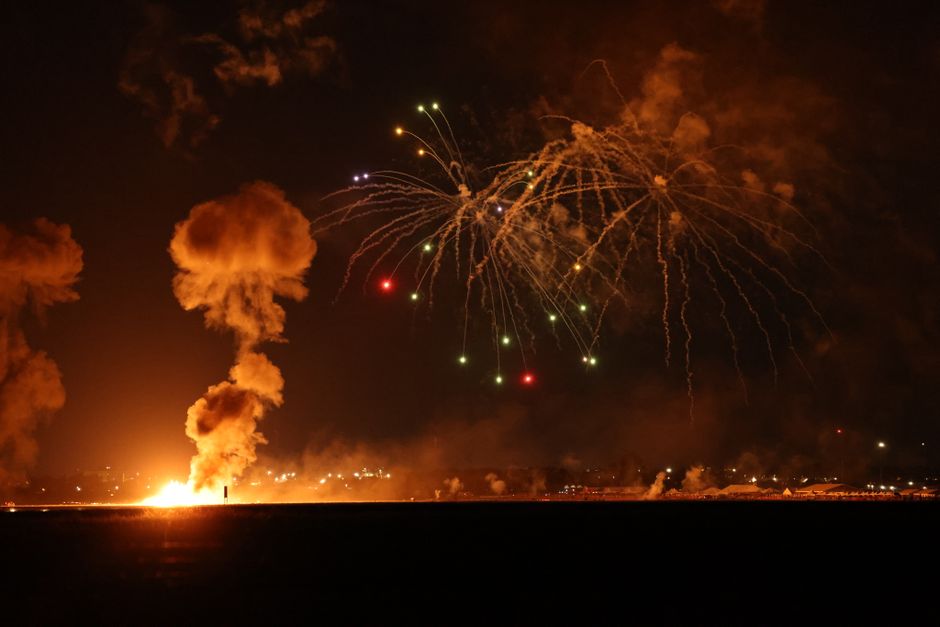
Kuwait's defense forces successfully intercepted seven ballistic missiles launched from Iranian territory during an aerial assault on Wednesday, according to official statements from the Gulf state's military authorities. The interceptions occurred over populated residential zones, preventing what could have been a catastrophic loss of civilian life, though fragments from both the incoming projectiles and defensive systems fell across inhabited neighborhoods. This incident marks a significant escalation in direct military engagement between Iran and Gulf Cooperation Council members, transforming theoretical security concerns into demonstrated kinetic warfare affecting millions of civilians in one of the world's most strategically vital regions.
The backdrop to this interception operation reveals a pattern of intensifying regional tensions that have festered for years but accelerated sharply following geopolitical upheaval in the Middle East. Iran has maintained an extensive ballistic missile arsenal as a core pillar of its strategic deterrence posture, repeatedly declaring the weapons' necessity in response to perceived threats from Israel and Western powers. Kuwait, positioned directly across the maritime border from Iran and hosting substantial American military infrastructure, has long existed in a precarious position between regional powers. Previous Iranian missile tests and periodic threats of retaliation for various incidents—whether real or rhetorical—have created a climate of uncertainty, but Wednesday's actual deployment of ballistic weaponry against Kuwaiti airspace represents a qualitative shift from posturing to operational execution. This transformation occurs within a broader Middle Eastern environment characterized by proxy conflicts, Israeli military operations, and American strategic repositioning, each layer adding complexity to the security calculus facing smaller Gulf states.
The Kuwaiti Ministry of Defense confirmed the interception of exactly seven ballistic missiles through air defense systems, with military statements emphasizing the successful prevention of larger civilian casualties through effective defensive measures. Fragments from the intercepted missiles and the defensive munitions deployed against them scattered across residential areas, creating dangerous debris fields but notably producing no reported deaths according to initial official assessments. This specific outcome—successful interceptions without casualty reports—distinguishes the incident from numerous historical precedents where similar missile attacks devastated civilian populations. The fact that multiple missiles were engaged simultaneously underscores the scale of the assault and demonstrates both the sophistication of the offensive capability deployed and the responsive capacity of Kuwait's air defense infrastructure, likely integrated with American and other Western systems given longstanding defense partnerships.
For civilian populations across Kuwait and indeed throughout the Gulf region, this incident crystallizes previously abstract security threats into tangible daily reality. Kuwaiti residents experienced the genuine possibility of ballistic impacts in their neighborhoods, forcing thousands into shelters and creating the visceral awareness that regional conflicts are no longer distant theoretical scenarios. The economic implications prove equally significant, as insurance markets, foreign investment decisions, and energy sector operations depend heavily on perceived stability in this petroleum-rich region. Higher insurance premiums for shipping through Gulf waters, potential disruptions to crude oil exports, and capital flight represent concrete economic consequences emanating directly from this military event. Furthermore, the successful interception—while militarily positive for Kuwait—simultaneously validates the threat level that analysts have long warned about, potentially triggering policy reassessments across government and private sectors regarding risk exposure in the Gulf.
This episode illuminates a broader strategic pattern in which smaller regional states find themselves caught between competing great power interests and a more assertive Iran willing to demonstrate its military capabilities through direct action. The interception success reflects decades of American military investment in Gulf ally air defenses, yet simultaneously exposes the reality that no defensive system achieves perfect coverage across an entire nation. Kuwait's situation mirrors challenges faced by other regional partners including Saudi Arabia and the United Arab Emirates, all of whom have experienced Iranian missile or drone attacks in recent years. The willingness to conduct this strike suggests Iranian decision-makers believe the strategic calculations favor demonstration of capability, whether intended as messaging to Israel, signaling resolve to the United States, or projecting power throughout the Gulf. The pattern indicates escalating confidence in Iran's willingness to use ballistic weapons, moving beyond rhetoric toward operational employment, fundamentally altering threat assessments that regional governments and international observers must continuously update.
International observers should focus on several specific developments requiring close monitoring in coming weeks and months. The United Nations Security Council response, particularly positions taken by permanent members Russia and China alongside Western states, will reveal whether this incident triggers diplomatic pressure or normalization of such military exchanges as accepted regional practice. Kuwait's own response to its parliament and regional partners—whether demanding greater security commitments, accelerating weapons acquisitions, or pursuing diplomatic channels—will signal how smaller Gulf states intend to adapt to this evolving threat environment. Additionally, responses from Israel, the United States, and European allies regarding their own security postures and Gulf commitments merit careful tracking, as this incident inevitably influences calculations about broader regional stability. Observers should watch for statements and policy adjustments from Saudi Arabia and the UAE in particular, as their own experiences with Iranian missiles creates precedent for understanding how Gulf states recalibrate defense spending and alliance commitments. The coming weeks will clarify whether this attack represents an isolated incident or confirms an escalatory trajectory, with implications extending far beyond Kuwait to reshape thinking about regional security across the Eastern Hemisphere.