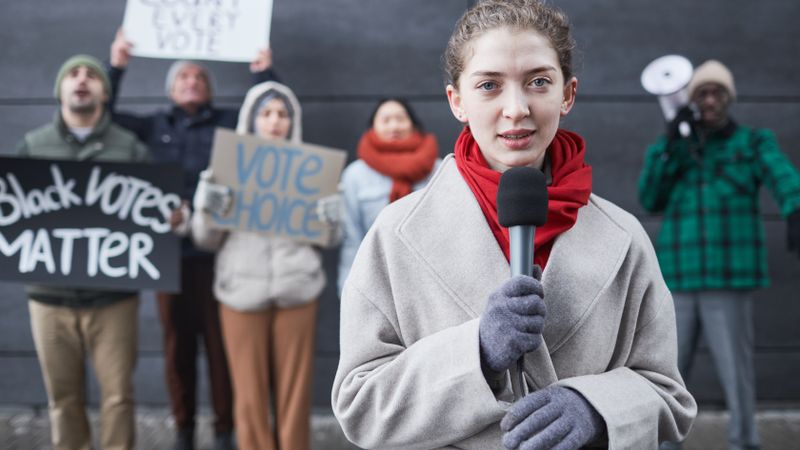
Tunisians protest for press freedom and release of political prisoners

Tunisia's streets erupted in organised demonstrations throughout late January 2024, as thousands of citizens congregated in central Tunis and other urban centres to demand the immediate release of detained political prisoners and the restoration of press freedom protections. The protests, which drew participants from civil society organisations, media practitioners, and opposition groups, represented one of the most visible challenges to President Kais Saied's consolidating authority since his extraordinary concentration of executive power began in 2021. The demonstrations occurred against the backdrop of mounting international concern regarding democratic backsliding in the North African nation, once celebrated as the Arab Spring's sole successful democratic transition. Organisers specifically called for the liberation of individuals held without transparent judicial proceedings and condemned what they characterised as systematic suppression of independent journalism through regulatory intimidation and legal harassment.
Tunisia's contemporary political crisis traces its roots to Saied's July 2021 suspension of parliament and assumption of wide-ranging decree powers, actions he justified as emergency measures to address institutional dysfunction and corruption. What began as an extraordinary constitutional interregnum has calcified into what international observers increasingly describe as a slide toward authoritarianism, with Saied consolidating parliamentary dominance through 2022 elections boycotted by major opposition parties. The successive narrowing of political space directly undermines the institutional architecture that Tunisia constructed throughout its 2011-2014 transition period, when the North African country distinguished itself from regional peers through genuine multiparty competition and press independence. These contemporary protests therefore carry disproportionate symbolic weight, as they test whether Tunisia retains sufficient civil society resilience to challenge executive overreach, or whether the democratic gains of the previous decade face terminal erosion. The timing of these demonstrations reflects accumulated frustration across multiple constituencies regarding visible deterioration in governance standards and human rights protections that had differentiated Tunisia from its regional neighbours.
The detained individuals whose release activists demanded include journalists facing charges widely interpreted as politically motivated, along with opposition politicians held in facilities where international observers have documented inadequate due process guarantees. Specific cases highlighted during the January protests involved lengthy pre-trial detention periods exceeding eighteen months for individuals whose alleged offences remained vaguely defined under broadly constructed statutes concerning public order or national security. Press freedom metrics from monitoring organisations documented marked deterioration in Tunisia's ranking throughout 2023, with particular concern raised regarding self-censorship patterns among media outlets subjected to unannounced regulatory inspections and financial pressure through advertising restrictions. The demonstrations themselves attracted fewer participants than earlier 2023 mobilisations, suggesting both fatigue among protest constituencies and heightened security deterrence that discouraged broader participation in street activism.
For international observers and regional analysts, Tunisia's political trajectory carries urgent contemporary relevance given the nation's historical significance as a democratisation anchor within the broader Middle East and North Africa region. Should Tunisia's institutional safeguards continue deteriorating without meaningful resistance or external pressure, the psychological impact would extend across neighbouring democracies and reform movements elsewhere in the region that explicitly referenced Tunisia's achievements as proof of democratic possibility. The specific targeting of journalists and opposition figures simultaneously undermines the information environment necessary for informed electoral participation or public accountability mechanisms, creating feedback loops where citizens encounter difficulty accessing unfiltered information about government performance. Tunisia's economic vulnerabilities—including persistent unemployment, inflation pressures, and limited foreign direct investment—create potential openings for authoritarian consolidation, as governments facing popular discontent sometimes accelerate institutional restrictions to suppress dissent regardless of legitimacy concerns. The immediate consequence for Tunisian citizens involves reduced capacity to petition for grievance redress or access independent analysis of policy consequences, functionally narrowing the democratic participation that once characterised the post-2011 transition period.
Tunisia's situation exemplifies a broader pattern of democratic backsliding across multiple Middle Eastern and North African territories where governments have instrumentalised security concerns, constitutional ambiguity, or institutional gridlock to justify extraordinary power centralisation. Morocco, Egypt, and Algeria have similarly employed emergency authorities to restrict opposition activities and constrain press operations, though Tunisia's particularly visible institutional reversal—from functional democracy to executive dominance within three years—suggests that initial democratic transitions lack self-sustaining institutional momentum without continuous reinforcement. The pattern reveals that formal democratic architecture alone proves insufficient protection against executive reclamation of authority, particularly where constitutions grant presidents wide emergency powers, security services maintain political autonomy, or fragmented opposition movements lack cohesion necessary for collective resistance. Tunisia's experience therefore carries cautionary implications for democracy proponents across the region and globally, demonstrating how rapidly institutional pluralism can transform when governing coalitions determine that democratic constraints impede their policy objectives or political longevity. The international response to Tunisia's trajectory—characterised by diplomatic statements rather than concrete consequences—suggests that external actors currently lack sufficient leverage or political will to meaningfully influence governmental course corrections.
International organisations including the United Nations Human Rights Council and regional bodies such as the African Commission on Human and Peoples' Rights should be monitored regarding their January and February 2024 response mechanisms to documented restrictions on political prisoners and press freedom. The Tunisia-focused monitoring missions scheduled by international democracy promotion organisations for March 2024 will provide measurable indicators regarding whether detention patterns show modification or escalation in response to public pressure. Additionally, Tunisia's domestic civil society coordination—particularly through the Tunisian Human Rights League and the National Union of Tunisian Journalists—represents crucial organisational nodes whose capacity to sustain mobilisation efforts will substantially influence whether international attention translates into meaningful institutional pressure. Parliamentary dynamics within Tunisia's significantly weakened legislature should be observed for any emergence of cross-party cooperation on constitutional protections, though current structural constraints severely limit such possibilities. The forthcoming months will reveal whether Tunisia's demonstrated capacity for street protest and organised civil society resistance can meaningfully constrain further executive power accumulation, or whether the nation's democratic institutions face continued institutional erosion despite public demonstrations of citizen concern.