
The Real Reason XRP Keeps Bouncing Back -- and What Comes Next
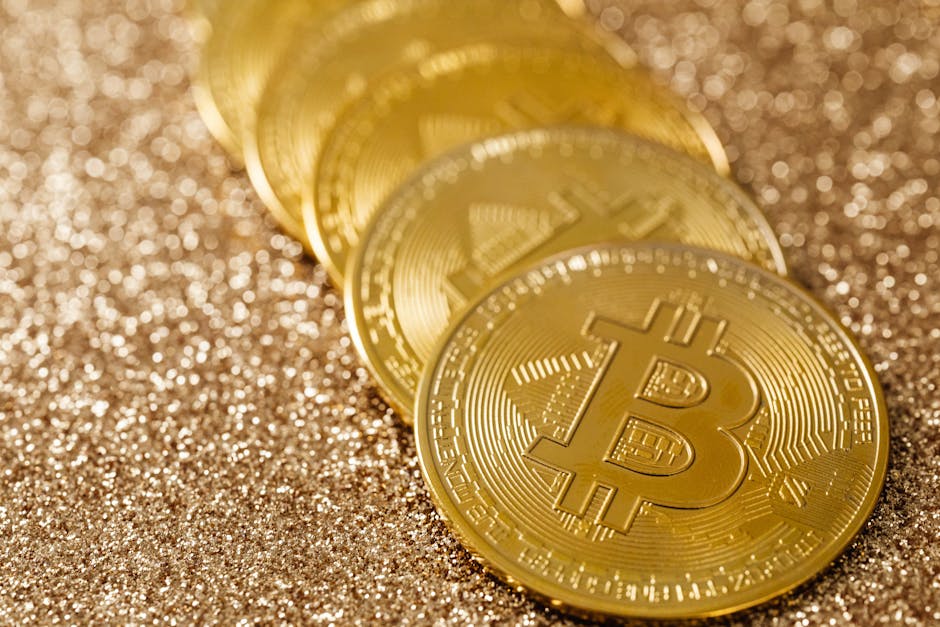
XRP, the native cryptocurrency of the XRP Ledger, has maintained a price floor above the $1 mark despite significant headwinds that would typically send alternative cryptocurrencies into sustained decline. This resilience reflects a fundamental shift in how the digital asset is being evaluated by market participants, moving away from purely speculative valuation models toward assessment based on institutional adoption prospects and partnership pipelines. The token's ability to resist downward pressure comes primarily from expectations surrounding potential major banking partnerships outside the United States, a development that continues to attract capital into XRP positions even as traditional use cases diminish. Understanding this dynamic requires examining both the deteriorating fundamental rationale for holding XRP and the compensatory optimism driving institutional interest in the asset's future utility within international payment corridors.
The bearish argument against XRP has become materially stronger over the past 24 months, presenting an increasingly difficult thesis to refute. Ripple, the company behind the XRP Ledger, has fundamentally altered its strategic direction by introducing Ripple USD, a stablecoin designed to accomplish the primary historical function of XRP with substantially reduced volatility. This development directly undermines XRP's original value proposition as a bridge currency for facilitating fiat transactions across Ripple's blockchain-based payment infrastructure. The introduction of RLUSD represents an institutional acknowledgment that XRP's inherent volatility makes it unsuitable for mission-critical payment applications where price certainty matters more than technical elegance. Additionally, XRP lacks the scarcity mechanics that provide foundational support for Bitcoin valuations, having been entirely pre-minted with a 100 billion token supply generated before the asset ever achieved market trading. The token also cannot participate in the decentralized finance ecosystem that has driven valuations for other cryptocurrencies, as the XRP Ledger lacks native smart contract functionality, preventing the emergence of developer communities building applications on top of XRP infrastructure. These structural limitations have compelled market analysts to identify alternative rationales for XRP ownership.
The narrative now anchoring XRP valuations centers on Ripple's long-standing ambitions to establish relationships with major international banking institutions seeking modernized payment rails. These partnerships represent the most credible bullish scenario for XRP, as they could generate sustained demand for the token as a liquidity mechanism in cross-border transactions where volatility-adjusted returns justify the use of a native cryptocurrency over traditional bridge currencies. The gap between current price levels and previous bull market peaks reflects the market's discount for regulatory uncertainty and the extended timeline required for banking partnerships to materialize from announcement through full implementation. Market participants monitoring XRP positions are essentially wagering on the probability that these institutional partnerships will eventually compensate for the token's diminished functionality relative to competing cryptocurrency platforms. The specific mechanism through which partnerships would generate demand remains somewhat abstract, but the possibility of large-scale banking adoption provides sufficient optionality to justify maintaining price support above the $1 psychological threshold. This forward-looking optimism has proven more durable than traditional technical analysis would predict, suggesting institutional capital is factoring in partnership announcements as a material probability rather than mere speculation.
For equity-focused investors and cryptocurrency market observers, the XRP price persistence carries immediate implications regarding how institutional capital is being allocated across the digital asset ecosystem. The maintenance of above-dollar valuations despite deteriorating fundamental support indicates that professional market participants view banking partnerships as sufficiently probable to justify long-term positions, even while acknowledging that XRP's historical use cases have been substantially compromised. This dynamic reveals something crucial about how sophisticated investors are evaluating cryptocurrency assets in 2026: traditional technical analysis regarding functionality and scarcity is being overridden by partnership optionality and institutional adoption probabilities. The willingness to hold XRP above $1 despite the availability of Ripple USD as a functionally superior alternative demonstrates that market participants are pricing in significant value for the token's potential as a preferred asset within restructured international payment systems. Additionally, the price resilience illustrates how partnership narratives can sustain valuations even when underlying technology fundamentals have deteriorated. This pattern has consequences for how investors should evaluate other cryptocurrencies whose valuations may similarly rest on partnership probabilities rather than current utility or technological advantage.
The broader significance of XRP's price persistence reflects a fundamental shift in how institutional capital evaluates cryptocurrency assets beyond the retail-driven narratives that dominated earlier market cycles. The evolution from XRP serving as a bridge currency to XRP serving as a potential institutional partnership beneficiary token represents a maturation of market analysis, acknowledging that utility functions can be redirected or abandoned as technological alternatives emerge. This trend connects to the wider cryptocurrency ecosystem's progression toward increasingly sophisticated institutional frameworks for valuing digital assets based on adoption probabilities and partnership pipelines rather than purely on-chain metrics. The stablecoin revolution exemplified by Ripple's introduction of RLUSD has fundamentally altered calculus around which digital assets should serve specific functions within payment networks, relegating volatility-prone tokens to optionality roles rather than utility roles. Market participants across the industry are now assessing which cryptocurrencies can maintain valuations based on future adoption potential despite current functional obsolescence. The XRP case study demonstrates that this market maturation is real and that capital will sustain positions in assets lacking obvious current utility if partnership prospects appear sufficiently credible and the timeline for realization seems manageable relative to alternative investment opportunities.
The immediate developments that merit monitoring involve Ripple's announced and potential banking partnerships, with particular attention to any announcements concerning major international financial institutions adopting systems that would generate sustained XRP demand. The second quarter of 2026 represents a critical window for observing whether announced partnerships transition from statements of intent to operational implementations that would create actual transaction volume. Investors should specifically track whether any major central banks or multinational banking consortiums announce formal relationships with Ripple that include XRP utilization frameworks. Additionally, the competitive landscape warrants monitoring, as other payments-focused blockchain networks are simultaneously pursuing banking partnerships, meaning XRP's value preservation depends partly on Ripple executing more effectively than competitors in converting partnership announcements into functioning systems. The regulatory environment surrounding cryptocurrency use in international payments remains in flux, and any significant regulatory clarity regarding digital asset bridge currencies could either substantially validate or invalidate the partnership-based investment thesis supporting current XRP valuations. Market participants should establish clear metrics for reassessing XRP positions if either major partnership announcements fail to materialize within reasonable timeframes or if competing systems achieve banking adoption more rapidly than Ripple's infrastructure. The next six to twelve months will likely prove decisive in determining whether institutional partnership optionality can sustain XRP valuations above $1 or whether the token eventually reflects its diminished functional utility relative to alternatives within the cryptocurrency ecosystem.


