🍌The man behind the Savannah Bananas' moves

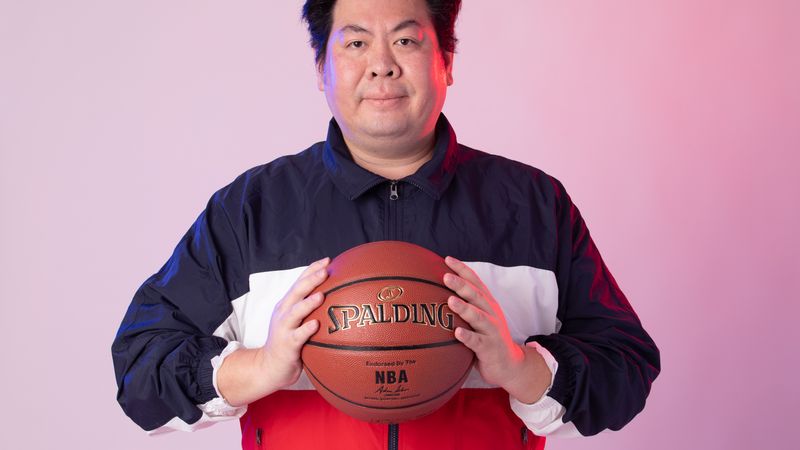
Maceo Harrison, a professional choreographer with deep roots in hip-hop and contemporary dance, has engineered a remarkable pivot into professional baseball entertainment, positioning himself as the creative architect behind the Savannah Bananas' increasingly distinctive performance culture. The transition crystallizes how unconventional talent from entertainment disciplines is reshaping the operational philosophy of independent minor league franchises, challenging traditional baseball's rigid boundaries between sport and spectacle. Harrison's journey from dance studios to ballpark stages represents not merely a career shift but a fundamental reimagining of how modern sports organizations harness creative talent to build fan engagement in an increasingly crowded entertainment marketplace. The Savannah Bananas operate within the independent Coastal Plain League, a structure removed from Major League Baseball's official minor league hierarchy, which grants franchises considerable autonomy in shaping their organizational identity and fan experience. Established in their current iteration in 2016, the Bananas have methodically constructed a brand centered on entertainment value, rejecting baseball's conservative traditions in favor of experimentation with game formats, stadium atmosphere, and performance integration.
This philosophy emerged partly from necessity—independent franchises lack the financial infrastructure and institutional weight of affiliated minor leagues, requiring innovation to compete for entertainment dollars in regional markets. Harrison's emergence as a key figure within this ecosystem reflects a broader industry recognition that professional sports increasingly compete not against other teams but against streaming services, concerts, comedy shows, and other entertainment options vying for consumer attention and disposable income. Harrison's background encompasses years of choreographic work spanning hip-hop, contemporary, and fusion styles, disciplines that emphasize improvisation, community engagement, and visual storytelling. His integration into the Bananas organization demonstrates the franchise's commitment to embedding performance specialists into decision-making structures, rather than treating entertainment as peripheral addition to game operations. The choreographer has shaped in-game entertainment routines, player introductions, and fan engagement activations that merge baseball with performative elements traditionally associated with concert productions and theatrical performances.
This represents a calculated departure from the organ-and-dance-cam formula that characterizes most professional baseball venues, substituting instead curated performances that treat the ballpark as an integrated creative space rather than a container for sequential game action interrupted by entertainment interludes. For baseball audiences and franchise stakeholders, Harrison's prominence signals a meaningful shift in how competitive sports organizations measure operational success and talent acquisition. Rather than limiting hiring to individuals with explicit baseball administration experience, franchises increasingly recruit from adjacent creative industries—film, music production, theater, event design—recognizing that fan experience quality now ranks alongside competitive performance as a determinant of franchise viability. This becomes particularly consequential for smaller market franchises and independent operations lacking the automatic fan loyalty that anchors established major league clubs, where innovation in presentation becomes essential to survival. The Bananas' willingness to centralize choreographic expertise within organizational strategy acknowledges an uncomfortable truth for traditional baseball gatekeepers: young audiences, particularly under thirty-five, evaluate sporting entertainment through frameworks borrowed from digital content, concert experiences, and social media aesthetics rather than through baseball's historical rule-and-tradition paradigm.
The Harrison case exemplifies a broader trend through which entertainment properties and sports properties are architecturally converging rather than remaining in discrete categories. Professional sports operated for decades within a presumption that athletic competition alone generated sufficient audience interest, with entertainment serving supplementary functions during timeouts and between innings. That model fragmented as streaming, gaming, and content proliferation fractured audience attention spans and expanded entertainment options exponentially. Franchises that recognized entertainment integration not as aesthetic embellishment but as essential operational strategy began capturing younger demographics and generating social media momentum that amplified reach beyond traditional television broadcasts. The Bananas' success—evidenced through sustained attendance growth and regional cultural prominence despite minor league classification—validates this philosophical reorientation, proving that audiences will support franchises that treat fan experience as integral to organizational identity rather than ancillary component.
Observers tracking baseball's evolution should monitor several specific developments emerging from this choreographer-franchise partnership model. The Coastal Plain League's trajectory through 2024 and 2025 seasons warrants close attention, particularly regarding whether the Bananas' entertainment-forward approach generates measurable advantage in fan retention and merchandise revenue compared to traditionally structured independent franchises. Simultaneously, Major League Baseball's affiliated minor league system, restructured substantially in 2021 with reduced team count and consolidated franchises, faces increasing pressure to compete with independent operations on experiential grounds; several Triple-A franchises have begun recruiting entertainment specialists modeled on the Bananas' approach. The broader question animating these developments concerns whether baseball's institutional conservatism will accommodate personnel models that position choreographers, designers, and entertainment specialists as essential rather than ornamental, or whether the sport's traditional gatekeepers will reassert historical boundaries around "appropriate" baseball operations. The next two to three seasons will likely determine whether Harrison's success catalyzes systematic change across professional baseball's organizational structures or remains confined to the independent circuit's experimental margins.