The Horn of Africa needs reconciliation, not new borders
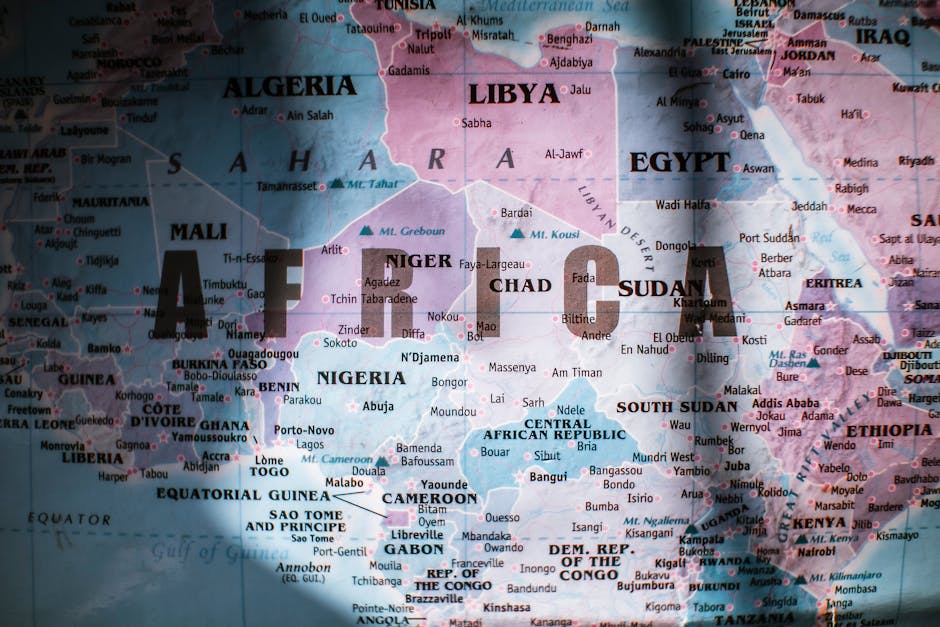
The question of Somaliland's international recognition represents one of the most consequential unresolved territorial disputes in Africa today, with significant implications for regional stability that extend far beyond the Horn of Africa. Since declaring independence in 1991 following the collapse of the Somali state, Somaliland has functioned as a de facto autonomous region in northwestern Somalia, maintaining its own government institutions, currency, and security apparatus while remaining internationally unrecognised by virtually every nation on earth. The territorial claim encompasses approximately 137,000 square kilometres and a population estimated at between 3.5 and 5.5 million people, making it larger than many recognised African states. Yet despite Somaliland's relative stability compared to southern Somalia and its sophisticated bureaucratic infrastructure, the international community has consistently resisted formal recognition, a reluctance that reflects deeper anxieties about the precedent such a decision would establish across a continent still grappling with the legacies of colonial boundary-drawing and separatist movements. The analysis of whether this status quo should change requires examining not merely Somaliland's credentials for statehood, but the cascading consequences that recognition would precipitate throughout the Horn of Africa and beyond.
The historical foundations of this dispute are rooted in the particular manner in which European colonialism fragmented the Horn of Africa and the subsequent failure of post-independence state-building in Somalia. The territories that now comprise Somalia emerged from competing British and Italian colonial spheres of influence, with the British Somaliland Protectorate administered separately from the Italian Trust Territory of Somalia until their unification in 1960. This administrative division created distinct institutional identities and governance traditions that persisted even after independence, generating enduring divisions between northern and southern Somali populations. The complete state collapse that began in 1991 destroyed what remained of centralised authority, allowing various armed factions to fragment territorial control according to clan affiliations and regional power bases. Somaliland's declaration of independence emerged from this chaos as a northern attempt to establish autonomous governance, particularly following the brutal civil conflicts of the late 1980s and early 1990s that devastated the region. The intervening three decades have seen Somaliland develop relatively effective institutions compared to the perpetually fractured administrations in Mogadishu, including competitive elections, a functioning tax system, and a professional security apparatus. However, this stability remains fragile and fundamentally dependent upon informal power-sharing arrangements among dominant clan structures rather than upon deeply institutionalised democratic practices or inclusive governance frameworks. Understanding this context is essential because it reveals that Somaliland's relative stability represents a precarious accommodation rather than a model for durable state formation in the region.
The practical governance indicators that Somaliland's advocates cite as evidence of state-building capacity do demonstrate meaningful institutional development. The region has conducted multiple rounds of presidential and parliamentary elections, with transitions of power occurring peacefully on several occasions since the mid-1990s, a track record that comparatively exceeds that of many southern Somali administrations. Revenue collection through port operations at Berbera and tax systems generates approximately $200 million annually in government revenue, enabling the maintenance of a security force estimated at between 10,000 and 20,000 military personnel and a functioning civil service structure. Additionally, Somaliland has negotiated significant infrastructure investments, including substantial port modernisation agreements with foreign companies and the development of an international airport facility that handles commercial traffic. These institutional capacities represent genuine achievement in a region where state collapse has been endemic. Yet these metrics, while impressive in relative terms, must be situated within a much broader assessment of the continent's territorial dynamics and the consequences that formal recognition would generate far beyond Somaliland's borders.
The contemporary stakes of Somaliland's recognition claim extend well beyond the immediate question of two million displaced Somali citizens or the fracturing of one failed state into multiple fragments. Recognition would establish a critical precedent for dozens of other unresolved territorial disputes across Africa, from the Oromo Liberation Front's independence aspirations in Ethiopia to various separatist movements in Kenya, Nigeria, and elsewhere on the continent. The international community's consistent refusal to recognise Somaliland, despite its relative stability and institutional sophistication, reflects a calculated consensus that opening this particular door would trigger cascading territorial fragmentation across a continent where artificial colonial boundaries remain the foundation of interstate relations. For the Horn of Africa specifically, recognition would effectively abandon the possibility of Somali national reconciliation and state reconstruction, entrenching the current fragmentation where rival federal states, autonomous regions, and Al-Shabaab-controlled territories operate independently without coordinated governance. This matters acutely because Somalia's deterioration affects maritime security in the Indian Ocean, provides ungoverned space for terrorist recruitment and operations, and generates refugee flows destabilising neighbouring states including Kenya, Ethiopia, and Djibouti. A formalised Somaliland state would eliminate any institutional framework for collective action against these transnational threats and would make regional diplomacy substantially more difficult across an area already challenged by state capacity deficits and interstate tensions.
The broader pattern that Somaliland's potential recognition reveals is the fundamental tension between the principle of self-determination and the architecture of international order constructed upon territorial stability and non-interference in internal affairs. This dilemma appears repeatedly across contemporary international relations, from Kosovo's contested independence to Catalonia's separatist movements to Taiwan's ambiguous status, yet Africa's particular vulnerability to state fragmentation along ethnic and regional lines makes the Somaliland question especially consequential for continental stability. The Horn of Africa has experienced repeated cycles of conflict, state failure, and humanitarian catastrophe precisely because governmental authority remains contested and territorial boundaries lack legitimacy among diverse population groups. Yet the solution to this instability cannot be the creation of new borders every time a region establishes functional governance capacity superior to that of its parent state, as this would set the continent on an irreversible course toward endless territorial partition. Rather, the regional challenge requires serious investment in inclusive state reconstruction that encompasses grievances driving separatism, particularly in Somalia where northern populations experienced marginalisation during the post-colonial period and deserve meaningful representation in national governance structures. Somaliland's stability, paradoxically, has become an impediment to this reconciliation process by demonstrating that exit from the Somali state is possible and potentially preferable to working toward state reconstruction.
The immediate developments that merit monitoring involve both the Somali state itself and the specific diplomatic initiatives that could either entrench Somaliland's separation or create pathways toward reintegration. The Federal Government of Somalia has undertaken substantial state-building efforts with international support, establishing functioning institutions in Mogadishu and attempting to consolidate territorial control that remains contested by various armed actors. Parallel to these efforts, the international community through the United Nations and African Union should evaluate whether meaningful negotiations between Mogadishu and Hargeisa remain feasible, particularly if they involve devolved governance structures that address the distinct interests of northern Somali populations. The African Union's position on Somaliland recognition, expected to be clarified further through its ongoing deliberations in 2024 and 2025, will prove decisive in determining whether diplomatic isolation continues or whether precedent-setting recognition becomes possible. Simultaneously, readers should monitor developments at the ports of Berbera and Bosaso, where commercial competition and international investment patterns increasingly structure Horn of Africa geopolitics, as these economic dynamics may prove more consequential than formal political recognition in determining regional trajectories. The stability of the entire region depends not upon drawing new borders, but upon rebuilding inclusive Somali institutions capable of addressing the legitimate grievances that produced Somaliland's separation in the first place.