
The ‘Green Jobs Collapse’ Is a Myth—Here’s What’s Actually Happening
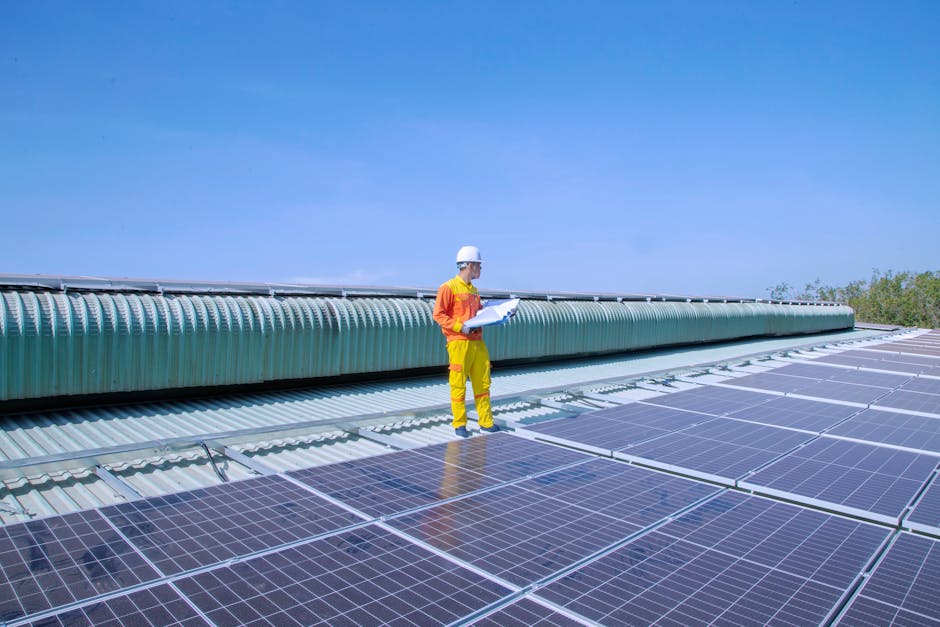
The renewable energy and sustainability sectors are experiencing unprecedented growth that has created a significant mismatch between available positions and qualified candidates, fundamentally reshaping employment opportunities across multiple industries. Rather than facing a collapse in green job creation, employers and analysts are confronting an inverse problem: far too many openings and insufficient numbers of trained professionals to fill them. This talent shortage is becoming increasingly acute in critical areas including solar installation, wind turbine maintenance, energy efficiency consulting, and environmental engineering, with employers reporting difficulty in recruiting workers who possess the specialized knowledge required for these rapidly evolving fields. The disconnect between job availability and workforce readiness has emerged as one of the most pressing challenges facing the clean energy transition, even as political discourse continues to debate whether green employment represents genuine economic opportunity or unsustainable government-sponsored initiatives. Understanding the origins of this talent gap requires examining the broader context of how quickly the renewable energy sector has expanded relative to traditional education and training infrastructure. Over the past decade, global investment in clean energy technologies has surged dramatically, driven by climate commitments, government incentives, and declining costs for solar and wind installations. However, the educational pipeline that traditionally prepares workers for technical and professional roles has not scaled at comparable speed.
Universities, community colleges, and vocational training programs require time to develop curriculum, hire instructors, and establish partnerships with employers who can provide hands-on learning experiences. Meanwhile, the sector continues expanding at a pace that outstrips institutional capacity to produce graduates. This temporal mismatch means that while conventional wisdom might suggest green jobs are overblown or politically motivated, the reality presents a more nuanced picture where opportunity vastly exceeds the supply of appropriately trained individuals to seize it. Evidence of this supply shortage manifests across multiple dimensions of the renewable energy and sustainability ecosystem. Recent industry surveys indicate that clean energy companies report longer hiring timelines and greater difficulty filling positions compared to sectors like traditional energy or manufacturing. Some employers have begun relocating operations or scaling back expansion plans specifically because they cannot recruit sufficient talent. Hiring managers consistently identify gaps in specialized technical competencies, with particular demand for workers experienced in photovoltaic system design, grid integration, battery storage technology, and environmental compliance.
Training organizations have seen explosive growth in enrollment for renewable energy certifications, yet completion rates often trail demand figures. Career counselors working with students transitioning into green sectors emphasize that those who successfully navigate the job market typically combine formal technical qualifications with supplementary certifications, relevant internship experience, and professional networking within their chosen field. The implications of this talent shortage extend far beyond individual career prospects and touch upon fundamental questions about the pace and feasibility of the global energy transition. Energy analysts and policy specialists have begun warning that workforce constraints could become the limiting factor in achieving emissions reduction targets, potentially outweighing concerns about technology costs or raw materials availability. If companies cannot hire and retain qualified personnel to install, maintain, and operate renewable infrastructure, deployment rates could slow regardless of technological readiness or financial resources. Industry representatives have called for increased government investment in workforce development programs, apprenticeships, and partnerships between educational institutions and employers. Educational advocates emphasize that addressing this challenge requires both expanding capacity within traditional institutions and creating alternative pathways through online learning, community colleges, and employer-sponsored training that can respond more dynamically to sector needs.
This situation reveals broader structural realities about economic transitions and labor market adaptation that deserve careful examination. The green jobs challenge demonstrates that policy support alone cannot automatically generate skilled workforces; the practical mechanics of education and training involve constraints that cannot be quickly overcome through regulation or investment announcements. It also illustrates how emerging sectors with rapidly evolving technology create particular difficulties for educational institutions that struggle to keep curriculum current when the field itself is transforming continuously. Furthermore, the story complicates simplistic narratives from both enthusiasts and skeptics of clean energy employment. Rather than a sector drowning in fictitious government-sponsored positions, or conversely a thriving job market easily accessible to any interested worker, the renewable energy field represents a genuine opportunity constrained by real and measurable skills gaps. This reality suggests that the coming years will be characterized not by debate over whether green jobs exist, but rather by competitive dynamics where individuals with appropriate qualifications enjoy significant advantages and employers invest increasingly in workforce development. The trajectory moving forward will be shaped by how quickly various stakeholders address documented bottlenecks in workforce preparation.
Those monitoring this situation should closely track the emergence and scale of alternative training pathways outside traditional universities, including bootcamps, employer partnerships, and online certification programs that promise faster development cycles aligned with industry needs. Additionally, observers should carefully watch whether government policies evolve to provide more targeted funding for green workforce development alongside their existing support for technology deployment, as this could substantially accelerate the pace at which skills gaps close. The intersection of talent availability, training capacity, and employment opportunity will likely define the practical constraints on renewable energy deployment over the next several years, making workforce development questions as strategically important as technological innovation itself.


