The Download: unlocking lithium and controlling Ebola
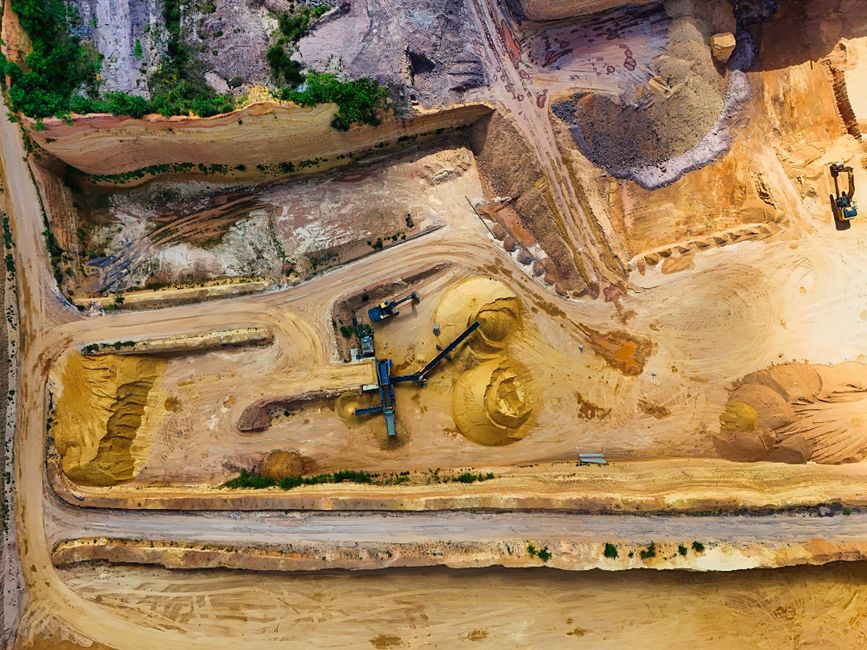
A transformative lithium extraction process has emerged from MIT research, promising to fundamentally reshape the economics of battery production and electric vehicle manufacturing. Yet-Ming Chiang, a materials scientist at the Massachusetts Institute of Technology, co-authored a study published in Science detailing a novel methodology that employs weak acid to dissolve silicate minerals, liberating lithium alongside other commercially valuable materials including alumina and silica. The technique represents a departure from conventional extraction approaches that have long dominated the industry. Rock Zero, a startup enterprise, has already commenced efforts to translate this laboratory discovery into commercial-scale operations. According to Chiang's assessment, this innovation will establish itself as the lowest-cost lithium sourcing mechanism globally once scaled to production volumes. The development arrives at a critical juncture when demand for lithium continues accelerating due to the expanding electric vehicle sector and the global transition toward renewable energy storage solutions. The significance of this breakthrough cannot be divorced from the historical constraints that have long plagued lithium extraction.
Traditional methods, including hard rock mining and brine extraction from salt flats, carry substantial environmental liabilities and operational expenses that ultimately drive up battery costs. Lithium has become indispensable to contemporary energy infrastructure, functioning as the backbone of rechargeable batteries that power everything from consumer electronics to grid-scale energy storage systems. Previous extraction techniques have generated considerable carbon emissions while creating localized environmental damage in lithium-rich regions, particularly in South America's "Lithium Triangle" spanning Argentina, Bolivia, and Chile. The timing of this research proves especially consequential as manufacturers face mounting pressure to reduce both production costs and environmental footprints simultaneously. Policymakers and industry participants increasingly recognize that sustainable battery supply chains will determine whether the global energy transition proceeds at the required velocity to meet climate targets. The research demonstrates that weak acid dissolution of silicate minerals creates a more efficient extraction pathway than existing methodologies. Beyond liberating lithium, the process simultaneously recovers alumina and silica as valuable byproducts, effectively transforming what might otherwise constitute processing waste into marketable materials.
This circularity addresses a fundamental inefficiency in conventional extraction, where significant portions of mined material generate no economic value while consuming resources and generating emissions throughout the extraction sequence. The study's publication in a peer-reviewed scientific journal indicates the research has undergone rigorous technical validation, establishing credibility within both academic and industrial contexts. Rock Zero's commitment to commercialization suggests investors and technology developers view the process as technically viable and economically attractive at scale, signaling confidence that laboratory results can translate into operational manufacturing environments. For the artificial intelligence and technology sector specifically, this lithium breakthrough carries immediate and consequential implications. Large language models and artificial intelligence systems require substantial computational infrastructure that depends increasingly on battery technology for both mobile deployment and data center resilience. The cost reduction Chiang projects would lower the expense of building and maintaining the energy infrastructure upon which modern AI systems depend. Furthermore, the environmental benefits of this extraction method align with growing corporate commitments to sustainability metrics that influence investment decisions and consumer perception.
Companies developing AI solutions face mounting scrutiny regarding their total environmental cost, including the supply chains that provision their hardware. By reducing emissions associated with battery material sourcing, this extraction technique contributes to mitigating one component of AI's broader environmental footprint. The cost advantages could accelerate deployment of edge computing and distributed AI systems in regions currently constrained by high energy storage expenses. This development exemplifies a broader pattern wherein scientific advancement in materials science and chemistry increasingly drives the feasibility of technological transformation in apparently distant domains. The breakthrough illustrates how bottlenecks in resource extraction can constrain entire industries, and how innovations addressing these constraints can catalyze acceleration across multiple sectors simultaneously. The convergence of lithium availability challenges, energy transition demands, and artificial intelligence infrastructure requirements creates powerful incentives for precisely these types of scientific breakthroughs. Furthermore, the startup model through which Rock Zero commercializes academic research represents an established but consistently important mechanism for translating fundamental discoveries into market-changing innovations.
The pattern reveals how universities remain essential nodes within technology development ecosystems, particularly for innovations requiring substantial basic research investment before commercial viability becomes apparent. This research also demonstrates that despite technological advances, physical resource constraints remain central challenges shaping the trajectory of the digital and AI economies. Industry observers should monitor Rock Zero's commercialization progress and timeline for achieving production-scale operations, as the company's success or failure will determine whether this cost reduction becomes realized across battery supply chains. The expansion of lithium extraction capacity will require not only technical success but also capital investment and regulatory approvals across multiple jurisdictions, making the period through 2026 and 2027 critical for assessing whether this innovation translates into measurable cost declines in battery pricing. Additionally, observers should track responses from established lithium producers such as Albemarle Corporation and Livent, which may invest in licensing the technology, developing competing processes, or integrating the innovation into their existing operations. The competitive dynamics that unfold will reveal whether incumbent industry participants can adapt to disruptive innovation or whether new entrants will capture the value created by superior extraction economics. Policymakers should simultaneously evaluate how this technology might influence geopolitical dynamics currently centered on lithium supply concentration, potentially reducing leverage that countries controlling significant reserves have historically exercised over energy transition investment and industrial policy decisions.