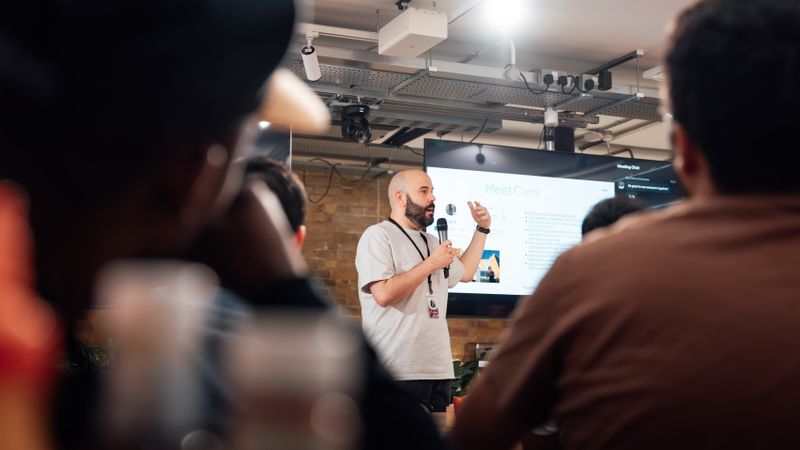
Sean Evans, Brittany Broski, Michelle Khare, Kareem Rahma, Julian Shapiro-Barnum & Cleo Abram On Trailblazing As YouTube Creators — Contenders TV: Docs + Unscripted
YouTube's dominance of digital entertainment has crystallised into a watershed moment for streaming culture, with the platform commanding consistent prominence in Nielsen's monthly streaming metrics since maintaining its position as America's viewing heavyweight. The appearance of Sean Evans, Brittany Broski, Michelle Khare, Kareem Rahma, Julian Shapiro-Barnum, and Cleo Abram at the Contenders Television festival dedicated to documentary and unscripted programming signals a fundamental recognition within the traditional media establishment that YouTube creators now occupy a tier of influence previously reserved for conventional television personalities. This recognition arrives at a precise juncture when YouTube routinely captures more than twelve percent of all television usage across the United States, a penetration rate that places it alongside, if not ahead of, legacy streaming services in shaping daily viewing habits. The assembled group represents diverse creative approaches across the platform's ecosystem, from food-centric entertainment to science education to venture capital commentary, yet they share a common distinction: each has built an audience constituency that traditional television networks actively court and study.
The trajectory of YouTube from marginal internet curiosity to mainstream entertainment behemoth traces a two-decade evolution that fundamentally challenged assumptions about content distribution and audience formation. When YouTube emerged in 2005, television executives largely dismissed it as a repository for amateur video clips and brief entertainment fragments, lacking the production values and narrative structure associated with prestige programming. The platform's gradual accumulation of viewership hours, coupled with algorithmic refinement that increasingly favored longer-form content, initiated a gradual erosion of traditional broadcasting's gatekeeping authority. By the early 2020s, YouTube had matured into a platform where individual creators could sustain multimillion-dollar enterprises, develop intellectual properties, and command sponsorship arrangements approaching those negotiated by conventional television productions. The convergence of improved mobile viewing infrastructure, subscription fatigue among traditional streaming services, and audience preferences for personality-driven content over scripted narratives accelerated this transition. The platform's current scale—routinely capturing more than twelve percent of aggregate U.S. television usage on Nielsen's monthly tracking—represents not merely audience fragmentation but rather a wholesale reorganisation of how mass entertainment functions within contemporary media ecosystems.
The specific creators highlighted at Contenders Television embody distinct content categories that collectively illustrate YouTube's range across entertainment, education, and lifestyle domains. Sean Evans, whose "Hot Ones" programme has generated cultural moments that ripple across social media platforms and occasionally dominate mainstream news cycles, demonstrates how YouTube's format flexibility permits extended-form interview content that often exceeds traditional television's temporal constraints while maintaining audience engagement through mechanical repetition and escalating stakes. Brittany Broski's trajectory from viral moment to sustained creator business model illustrates the platform's capacity to absorb personalities who might lack fit within traditional broadcasting parameters, creating sustainable career paths outside conventional network structures. Michelle Khare's emphasis on experiential challenge content and scientific exploration represents another content taxonomy where YouTube permits more granular audience targeting and longer narrative arcs than traditional television's scheduling requirements allow. The collective presence of these creators at a festival explicitly devoted to documentary and unscripted programming—historically domains of television prestige and industry recognition—underscores a structural shift in how the broader entertainment industry now conceptualises content classification and quality assessment.
For entertainment industry professionals and investors monitoring content trends, the elevation of YouTube creators into prestige festivals carries immediate practical implications for talent recruitment, production partnerships, and audience metrics interpretation. Traditional television networks increasingly need to understand that audience loyalty now distributes across platforms rather than consolidating within single network schedules, forcing recalibration of how success gets measured and valued. The creators assembled at Contenders Television command subscriber bases ranging into the millions, each representing precisely targeted demographic cohorts that advertisers value intensely—often more intensely than networks achieve with broader broadcast audiences. Productions like "Hot Ones" have demonstrated that YouTube's format permits advertising integration that audiences actively engage with rather than skip or resent, a distinction from traditional television advertising that networks monitor with considerable anxiety. The presence of these creators in industry festivals signals that talent scouts now view YouTube celebrity status as equivalent to, or in some cases superior to, traditional television credits when assessing bankability and audience reach. Streaming services competing for subscriber attention increasingly incorporate YouTube creator talent into prestige productions, recognising that existing audience relationships transfer into visibility and subscription justification.
The broader pattern emerging from YouTube creators' increasing prominence within traditional entertainment industry institutions reflects a fundamental reordering of cultural authority and audience attention. Television's century-long role as arbiter of entertainment quality and cultural significance has undergone irreversible erosion, with YouTube increasingly functioning as the primary venue where emerging entertainment talent cultivates initial audiences and establishes sustainable career foundations. This transition extends beyond simple generational preference—it represents a structural incompatibility between television's broadcasting economics and contemporary audience expectations regarding content diversity, creator personality, and format flexibility. The creators featured at Contenders Television frequently maintain deeper audience relationships than traditional television personalities achieve, partly because YouTube's algorithmic distribution and direct creator-audience interaction models encourage ongoing dialogue rather than unidirectional broadcast transmission. The platform's documented capacity to generate twelve percent or greater television usage penetration across the entire American viewing population—a metric that would constitute blockbuster success for any traditional television network—demonstrates that audience preference has fundamentally shifted. This realignment suggests that future entertainment industry prestige, funding, and recognition will increasingly flow toward platforms and creators already commanding audience attention rather than toward traditional gatekeepers attempting to reassert declining influence.
Looking forward, several specific developments warrant close industry monitoring to track the trajectory of this ongoing realignment between YouTube creators and traditional entertainment institutions. The content produced by featured creators at Contenders Television should be examined for any subsequent traditional television or premium streaming adaptations that signal network confidence in YouTube IP translation, which would indicate institutional acceptance rather than mere acknowledgment. Viewership metrics tracked by Nielsen throughout 2024 and 2025 will provide quantifiable evidence regarding whether YouTube's twelve percent-plus television usage plateau represents a stable equilibrium or merely an interim stage in continued platform growth and traditional broadcasting decline. Major streaming services' strategic decisions regarding creator acquisition and programming partnerships offer another measurable indicator—investment patterns reveal genuine institutional resource allocation rather than superficial credibility gestures. The sustained viability of YouTube creator business models during macroeconomic downturns and advertising market contractions will test whether current success reflects durable structural advantages or temporary market conditions. Industry observers should specifically track whether traditional television networks develop successful creator recruitment strategies that effectively transfer YouTube audiences into television viewership, or whether cross-platform audience loyalty proves platform-specific and difficult to migrate. The convergence of these factors will ultimately determine whether YouTube creators represent a disruptive challenge to traditional entertainment structures or constitute a permanent reorganisation of how entertainment industries identify talent, measure success, and allocate resources within increasingly fragmented digital media ecosystems.