Lebanon’s social grocery store fighting rising costs and displacement
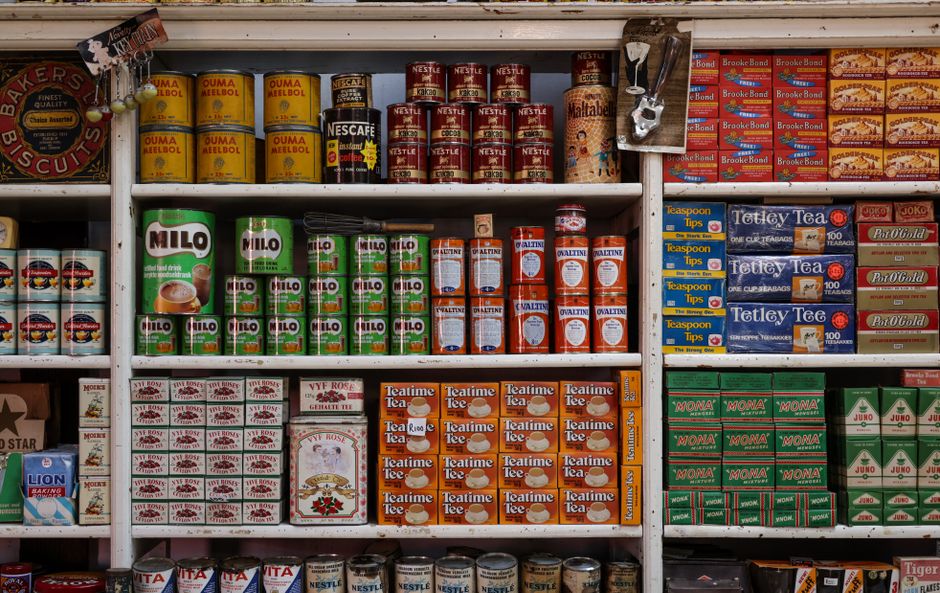
In the Beirut suburb of Shatila, a grassroots initiative called "Man wa Salwa" operates as a community-managed social grocery store, providing subsidized essential goods to hundreds of Lebanese families navigating economic collapse and forced displacement. Established in response to the nation's severe monetary crisis, the store functions as a lifeline for residents grappling with inflation that has rendered basic commodities financially inaccessible to vast swaths of the population. This enterprise represents one of many localized survival mechanisms emerging across Lebanon as traditional economic structures have fractured, leaving families to devise alternative means of sustenance and dignity in the absence of functional state support systems.
Lebanon's economic trajectory toward near-total collapse accelerated dramatically following the 2019 banking crisis, when the Lebanese pound lost roughly 95 percent of its value against the U.S. dollar, transforming the nation into what international observers have termed an economic wasteland. The country's spiraling currency devaluation, coupled with political paralysis and the lingering devastation of the August 2020 Beirut port explosion, created cascading humanitarian pressures that rendered formal safety nets inadequate for the majority of the population. The emergence of initiatives like Man wa Salwa must be understood within this context of institutional failure, where governmental capacity to provide basic welfare has essentially evaporated, leaving civil society organizations and community groups to assume responsibilities that should theoretically rest with the state. This moment represents a critical juncture in Lebanon's development, as the nation moves from struggling state to fragmented survival economy held together by informal networks and volunteer-driven operations.
The store's operational model prioritizes accessibility through subsidized pricing structures that significantly undercut commercial market rates for staple foods and household necessities. Rather than operating as a conventional retail establishment, Man wa Salwa functions as a cooperative enterprise where families can purchase items at costs substantially lower than those found in traditional supermarkets, enabling them to stretch already-depleted household budgets further. The initiative has expanded its reach to serve hundreds of families across Shatila and surrounding communities, addressing the specific vulnerability of populations that include Palestinian refugees, migrant workers, and economically displaced Lebanese nationals. The store's inventory focuses on high-turnover essentials rather than luxury items, reflecting both the economic realities of its customer base and the operational constraints inherent in maintaining supply chains during currency instability.
For households in Lebanon's lower economic strata, the difference between accessing affordable essentials and facing complete destitution has narrowed considerably throughout the past five years, making initiatives like Man wa Salwa functionally essential rather than merely supplementary. Families managing on what remains of their savings, remittances, or irregular informal work face impossible calculations when purchasing basic foodstuffs in a market where price volatility has become the only constant. A single mother supporting children on sporadically available day labor income, for instance, cannot afford the luxury of purchasing goods at full market rates while simultaneously maintaining housing, electricity, or transportation costs. The social grocery store directly interrupts this trajectory toward complete economic exclusion, allowing vulnerable households to preserve whatever economic cushion they retain for critical non-food expenses, while the subsidized pricing structure simultaneously reduces the desperation that drives displacement and irregular migration. Without such alternatives, the pressure on families already facing housing insecurity would intensify further, likely accelerating internal displacement and irregular emigration patterns.
The proliferation of community-run social enterprises across Lebanon reveals a broader structural pattern in which civil society has become the functional safety net for populations abandoned by state institutions. This phenomenon extends beyond grocery stores to encompass informal lending networks, community healthcare initiatives, school feeding programs, and neighborhood resource-sharing arrangements that collectively constitute Lebanon's de facto welfare system. Rather than representing successful localized solutions to systemic problems, these initiatives actually illuminate the profound institutional collapse underlying Lebanese society, where survival itself has devolved to individual initiative and collective self-organization. The sustainability question embedded within this pattern remains urgent: voluntary labor, donated goods, and community fundraising cannot indefinitely substitute for functioning public institutions and economic recovery. Man wa Salwa's success in serving hundreds of families, while genuinely valuable, simultaneously demonstrates the catastrophic scale of need that extends far beyond what community voluntarism can realistically address, suggesting that without macroeconomic stabilization, such initiatives will become increasingly overwhelmed by demand they cannot satisfy.
The trajectory of Lebanon's crisis and the adequacy of community-based responses will become clearer through monitoring several specific developments in the coming months. International observers should track whether the Lebanese government's anticipated engagement with IMF negotiations, potentially accelerating through mid-2024, produces any measurable currency stabilization or whether further devaluation continues eroding the purchasing power that even subsidized goods provide. Simultaneously, the capacity of organizations like Man wa Salwa to maintain their operational scope warrants close observation, particularly regarding whether funding constraints or supply-chain disruptions force contraction of their service reach. The scale of internal displacement resulting from economic pressure represents another crucial indicator, as do patterns in irregular emigration among working-age adults seeking employment outside Lebanon's collapsed labor market. These measurable developments will collectively determine whether grassroots initiatives represent a sustainable interim solution or merely a temporary palliative masking a humanitarian crisis of escalating proportions requiring international intervention and comprehensive economic restructuring.