Hundreds brave freezing weather in La Paz to line up for affordable food
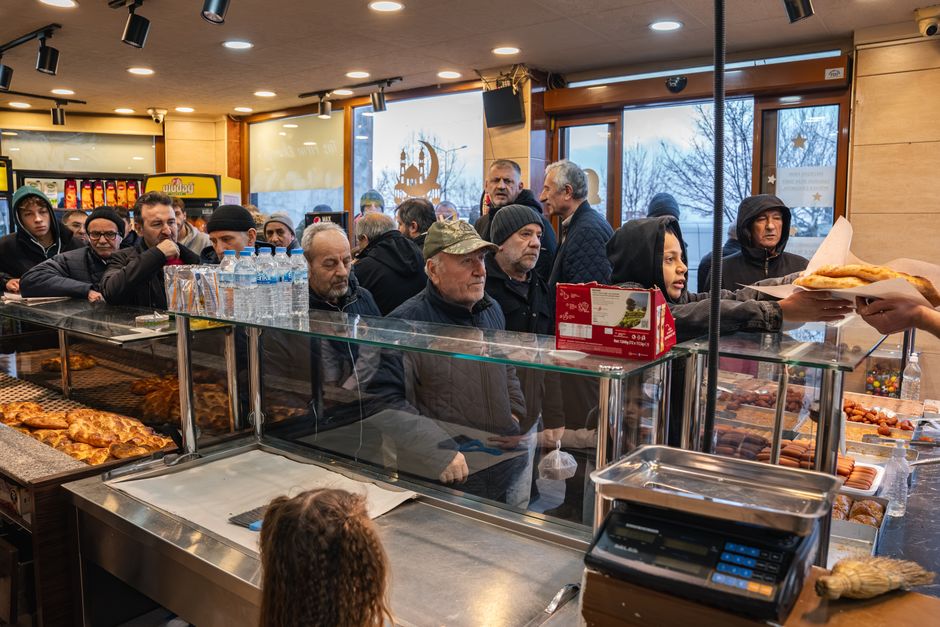
In the Bolivian capital of La Paz, hundreds of residents endured near-freezing temperatures to secure affordable chicken in recent days, a striking visual manifestation of economic pressures cascading through one of South America's most vulnerable economies. The queuing phenomenon, occurring at altitude in a city perched at 3,650 meters above sea level where temperatures plummet during winter months, underscores the desperation driving ordinary citizens toward basic food staples at prices they can afford. This scene, replicated across multiple distribution points throughout La Paz, represents far more than a simple commercial transaction or promotional event. Rather, it signals deepening food insecurity and purchasing power erosion among populations already wrestling with persistent inflation, wage stagnation, and limited economic opportunity. The scale of participation and willingness to brave extreme weather conditions reveals the intensity of daily survival calculations now dominating household finances across Bolivia's urban centers.
Bolivia's economic trajectory has deteriorated markedly over recent years, transforming the nation into a cautionary case study of regional instability and fiscal mismanagement. The country experienced political upheaval in 2019 following disputed elections, subsequently enduring prolonged institutional fragility that impeded coherent economic policymaking and investor confidence. Successive administrations have struggled to stabilize currency valuations, combat inflation, and maintain basic service provision across health, education, and infrastructure sectors. International commodity price volatility, particularly affecting tin and natural gas exports upon which Bolivia relies heavily, compounds these structural vulnerabilities. Food price inflation has accelerated substantially, driven by currency depreciation, supply chain disruptions, and global commodity market pressures that disproportionately impact import-dependent nations. For working and lower-middle-class Bolivians, the cumulative effect translates into shrinking real wages and purchasing power, making basic nutrition an increasingly contested household budget item rather than an assumption.
The specific dimension of this crisis—populations queuing for hours in subzero conditions to purchase chicken at discounted prices—reveals the extent of food affordability deterioration. Chicken, historically positioned as relatively inexpensive protein accessible to lower-income households, has become sufficiently expensive that organized distribution efforts at reduced prices attract hundreds of willing participants despite severe weather. The altitude factor compounds the physical ordeal; La Paz's high-altitude location means cold temperatures pose genuine health risks including hypothermia and altitude-related complications, yet these considerations prove secondary to food procurement imperatives. The repetition of such scenes across multiple locations throughout the city indicates this represents systemic food access dysfunction rather than isolated incident. Market mechanisms have demonstrably failed to deliver affordable nutrition to significant population segments, prompting informal economic actors and civic organizations to establish parallel distribution channels. This bifurcation of food markets—formal retail pricing that excludes millions alongside ad-hoc affordable distribution creating temporary scarcity—characterizes economies experiencing advanced-stage inflation and purchasing power collapse.
For World readers, this Bolivian scenario carries immediate relevance as a bellwether indicator of economic deterioration patterns now emerging across multiple developing economies. The phenomenon directly impacts regional stability calculations; countries experiencing generalized food insecurity witness elevated social tension, political radicalization, and potential civil disorder. Bolivia's history includes significant indigenous majority populations and strong labor union movements, creating preconditions for politicized responses to economic hardship. Government legitimacy erodes rapidly when citizens cannot afford basic nutrition, a threshold crossed in Bolivia's current economic environment. Additionally, food insecurity drives migration pressures, with households increasingly likely to seek opportunities elsewhere when local subsistence becomes impossible. For neighboring countries and international migration monitoring frameworks, Bolivian conditions merit attention as potential drivers of northbound and regional migration flows. The broader hemispheric context finds multiple nations simultaneously wrestling with inflation and purchasing power erosion, yet Bolivia's severity suggests it may presage conditions emerging elsewhere without stabilization intervention.
This phenomenon reveals broader patterns of economic fragmentation increasingly visible across Latin America's peripheral economies, where formal market systems fail significant population segments while informal mechanisms assume subsistence functions. The transition from retail-based food access to queue-based distribution indicates market collapse rather than mere price elevation; when organized distribution of basic commodities attracts hundreds of people in extreme weather, conventional pricing mechanisms have effectively ceased functioning for material portions of the population. This pattern connects to deepening inequality within developing economies, where asset holders and formal employment beneficiaries maintain purchasing power while wage-earning populations experience accelerating real income deterioration. Bolivia exemplifies the vulnerability of nations lacking economic diversification, heavy commodity export dependence, and weak institutional frameworks for managing macroeconomic shocks. The queuing scenes also reflect gender and generational dimensions often invisible in headline economics; predominantly women shoulder responsibility for household food procurement, bearing disproportionate physical burden and time costs of securing affordable nutrition. This gendered economic stress cascades through education and health outcomes, with children's nutritional status and school attendance directly threatened by household food insecurity.
Forward observers should monitor Bolivia's economic trajectory through 2024 and 2025, particularly focusing on Central Bank currency stabilization efforts and inflation reduction metrics. The International Monetary Fund's engagement with Bolivian authorities regarding macroeconomic adjustment programs will indicate whether external pressure produces coherent fiscal discipline or political resistance deepens policy paralysis. Domestic political dynamics warrant equal attention; growing food insecurity historically correlates with electoral volatility and radical political movements, making Bolivia's next electoral cycle potentially transformative. Agricultural production data, particularly from eastern lowland regions supplying food to La Paz, should be monitored for yield changes that could either exacerbate or marginally relieve pressure on urban food availability. Regional developments in Paraguay, Peru, and Ecuador merit parallel tracking, as similar inflation and purchasing power patterns could emerge across the Andean region, potentially creating coordinated crisis conditions rather than isolated national difficulties. The sustainability of informal food distribution networks—whether expanding or proving inadequate to demand—represents a measurable indicator of whether Bolivia approaches social stabilization or continued deterioration.