How I Raised $14M For My Startup When I Stopped Pitching And Started Speaking
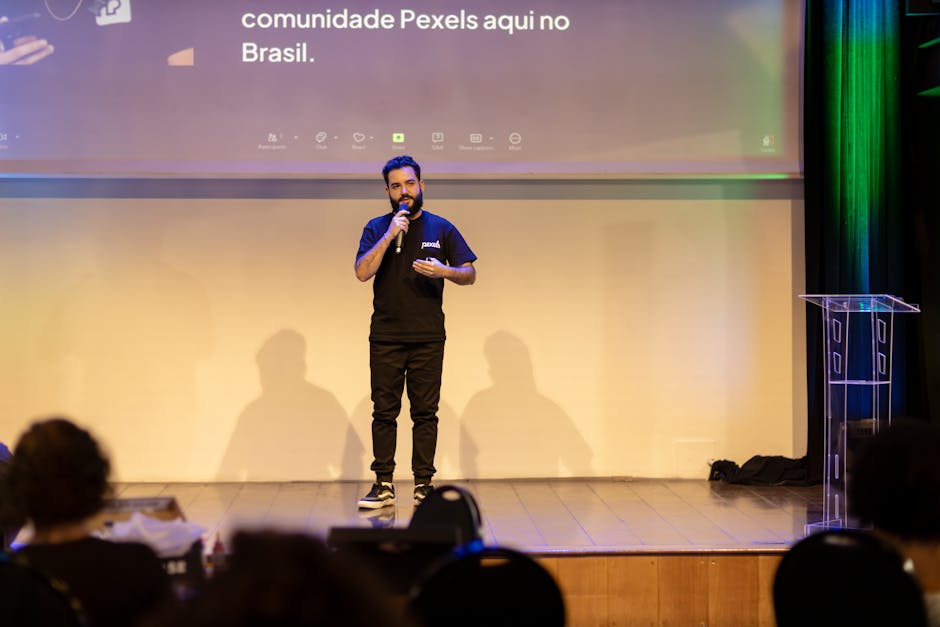
During the most recent funding cycle, a Gen Z neuroscientist and Harvard alumna successfully raised fourteen million dollars for her mental health technology startup without employing the traditional venture capital playbook of cold outreach, deck refinement, and months of preparatory relationship-building. Rather than conducting extensive email campaigns or scheduling meetings through warm introductions orchestrated half a year in advance, Alyx van der Vorm built her funding round entirely through organic personal encounters: speaking engagements, dinner conversations, and conference appearances that generated investor interest naturally. This unconventional approach challenges the widely accepted fundraising methodology that has dominated startup culture for the past decade, suggesting that the most effective capital formation occurs when founders position themselves as thought leaders and problem-solvers rather than as supplicants requesting investor attention. The distinction matters considerably in today's market, where the traditional mechanics of founder-investor relationships have become increasingly transactional and where the sheer volume of pitches reaching institutional investors has rendered cold outreach statistically ineffective.
The conventional fundraising narrative has long emphasized preparation and systematic execution. Founders are instructed to develop comprehensive target lists of relevant investors, spend months cultivating relationships through mutual connections, perfect their presentation decks through countless iterations, and then engage in extended cycles of meetings, follow-ups, and rejection. This methodology assumes that investor capital flows predictably through structured channels and that founder persistence, combined with a compelling narrative, will eventually unlock doors. However, the venture capital environment has fundamentally shifted in recent years. The democratization of entrepreneurship has flooded institutional investor pipelines with qualified candidates, each armed with increasingly sophisticated pitches and polished materials. The traditional approach, designed for an era when founder access to institutional capital was scarce and gatekeepers controlled information flow, no longer functions as advertised. Simultaneously, investor behavior has evolved in response to information overload. Decision-makers at prominent funds now filter opportunities not through cold email but through established networks, conference programming, and media coverage. This structural change suggests that the most effective fundraising strategy may require founders to invert their approach entirely, focusing less on pushing their message into crowded inboxes and more on creating conditions where investors naturally encounter their ideas and leadership.
The quantitative evidence supporting this shift appears striking. Data compiled by Qubit Capital demonstrates that nearly half of all cold emails directed toward investors never receive a single open, let alone a substantive response. Among the cold outreach that does garner attention, the conversion rate into meaningful next steps hovers at approximately seven and a half percent, even when senders execute the approach with technical precision and follow established best practices. These figures reveal a fundamental problem with scale and noise: a single prominent venture investor may receive several hundred cold pitches weekly, creating an environment where exceptional decks and compelling narratives struggle to penetrate the sheer volume. The fourteen million dollars raised through van der Vorm's alternative method came exclusively from personal interactions, each generating sufficient mutual comfort and understanding to proceed toward investment. This outcome suggests not merely a superior capital-raising approach but an entirely different mechanism by which investment decisions materialize when they originate from relationship and visibility rather than from impersonal documents sent to strangers.
For founders navigating today's startup ecosystem, this analysis carries immediate practical consequences. The traditional cold outreach strategy consumes enormous quantities of founder time and emotional energy, typically consuming six months to a year of consistent effort with minimal return. Founders craft targeted email lists, monitor open rates obsessively, celebrate minimal response rates as victories, and modify their messaging endlessly in search of a magic formula that rarely materializes. Meanwhile, the opportunity cost remains largely invisible: this time might instead be spent deepening expertise in their chosen problem domain, generating intellectual property that demonstrates genuine thought leadership, or positioning themselves as speakers and contributors to industry conversations. The shift from pitching to speaking carries distinct advantages in the current market. When a founder appears as a knowledgeable speaker at a prominent conference or publishes substantive analysis about an industry problem, investors encounter the founder not as a supplicant seeking capital but as a credible analyst offering valuable perspective. The psychological dynamic reverses entirely. Furthermore, the founder's expertise becomes externally validated through the platform itself, whether conference organizer or publication. An investor who encounters a founder through speaking has essentially received a third-party endorsement before any direct conversation occurs. This distinction proves particularly significant for underrepresented founders who face structural skepticism within traditional venture processes, as demonstrated expertise and media visibility carry weight that cold outreach cannot generate.
The underlying pattern this case reveals extends beyond individual fundraising mechanics into broader questions about how institutional capital flows through ecosystems and which founders gain access to that capital. Venture funding has historically concentrated among graduates of elite institutions, individuals with prior startup success, and founders embedded within existing investor networks. Van der Vorm herself acknowledges this structural advantage, noting that Harvard alumni collectively have launched over one hundred forty-six thousand companies while recognizing that her educational background opened doors unavailable to most founders. However, her analysis also identifies a critical limitation to credential-based access: institutional affiliation alone does not generate investment. The vast majority of Harvard-educated founders never raise institutional capital of any meaningful scale, suggesting that networks and credentials represent necessary but insufficient conditions. What distinguishes successfully funded founders within elite networks appears to be the ability to articulate a self-evident problem that resonates immediately with decision-makers. Van der Vorm's focus on mental health among teenagers and the displacement of human connection by social media presents a problem that investors observe directly in their own families and communities. This thematic resonance means that investor conviction emerges not from persuasion but from recognition. The broader implication concerns how emerging founders without elite institutional backgrounds might build credibility and visibility: through sustained intellectual engagement with meaningful problems, through generating and sharing analysis that demonstrates genuine expertise, and through positioning themselves in rooms where investor encounters happen naturally rather than through forced meetings. This pattern suggests that the venture landscape is gradually shifting toward performance-based credibility even as structural inequalities persist.
Looking forward, several specific developments warrant close observation as this shift potentially accelerates. The Conference Board and similar institutional research organizations may soon measure the correlation between founder speaking visibility and subsequent funding success, providing quantitative evidence that could reshape founder and venture firm behavior at scale. Additionally, platforms that aggregate founder-generated content and analysis—whether through newsletters, podcasts, or structured writing opportunities—will likely emerge or expand as crucial infrastructure for founder visibility and investor discovery, potentially disrupting the traditional role of pitch events and investor conferences. Within the next eighteen to twenty-four months, venture firms may begin systematically sourcing deals from speaking circuits and intellectual leadership rather than through pitch volumes, with the most data-driven firms measuring their deal source attribution with precision. Founders would be wise to track these developments while simultaneously evaluating their own allocation of time and energy. The transition from pitch optimization to thought leadership engineering represents not merely a tactical adjustment but a fundamental reframing of how founders should position themselves relative to capital. Success in this emerging model requires sustained commitment to expertise development and visibility rather than the intense but time-limited effort of the traditional fundraising sprint, suggesting that the founders who thrive in this new environment will be those who approach their industries and problems as intellectual challenges rather than as capital-raising exercises.