
Boston Children’s uses AI to unlock new diagnoses
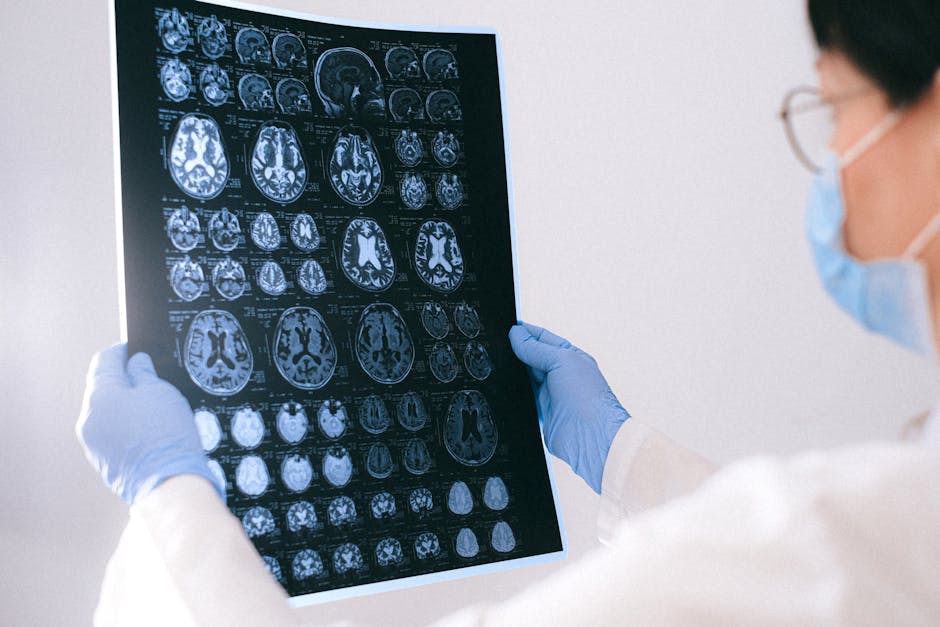
Boston Children's Hospital has deployed OpenAI's artificial intelligence technology to identify and diagnose rare diseases in patient populations that previously went undiagnosed or misdiagnosed, marking a significant intersection between clinical practice and large language model application in one of America's most prestigious pediatric medical institutions. The implementation, which has already contributed to more than forty rare disease diagnoses, represents a concrete advancement in how machine learning systems can augment diagnostic capabilities within complex healthcare environments. This development emerged not from theoretical research but from practical deployment within an active medical facility treating thousands of patients annually, positioning Boston Children's at the forefront of translating AI capabilities into measurable clinical outcomes. The hospital's approach demonstrates how institutional adoption of AI can extend beyond administrative efficiency to directly impact patient care pathways, disease identification, and the physician's diagnostic toolkit in real time.
The broader context for this initiative sits within a healthcare landscape increasingly pressured to improve diagnostic accuracy while managing resource constraints. Rare diseases, by definition, challenge conventional diagnostic pathways because their low incidence frequency means individual physicians may encounter them rarely or never during their careers. This diagnostic gap has historically resulted in patients experiencing extended periods of medical uncertainty, multiple specialist referrals, and delayed interventions. The integration of large language models into medical institutions comes at a moment when healthcare systems globally recognize that AI could potentially bridge knowledge gaps and accelerate pattern recognition across vast medical literature and patient data simultaneously. Boston Children's adoption of OpenAI's technology reflects broader industry recognition that AI systems trained on extensive medical knowledge could serve as force multipliers for physicians navigating complex diagnostic scenarios, particularly in pediatric rare disease contexts where clinical experience concentrations are inherently thin.
The deployment has yielded concrete results that extend beyond theoretical capability assessment. The identification of more than forty rare disease cases represents tangible diagnostic captures that, absent the AI system, would likely have remained unresolved within the hospital's patient population. This number carries significance because it demonstrates that the technology has moved beyond pilot phase proof-of-concept into operational utility. Boston Children's implementation specifically leverages OpenAI's capabilities to help physicians process complex patient histories, symptom presentations, and clinical findings against the expansive medical knowledge base the language model represents. The hospital has simultaneously reduced operational burden on its clinical staff, meaning the AI deployment achieves dual objectives of expanding diagnostic reach while decreasing the cognitive load on physicians managing heavy patient caseloads. This dual-benefit structure explains why the initiative has gained institutional traction and why the outcomes merit serious professional attention.
For practicing healthcare professionals and hospital administrators, the Boston Children's case carries immediate relevance that transcends academic interest. The practical reality that more than forty rare disease diagnoses have been achieved means that somewhere between forty and substantially more pediatric patients have received diagnostic clarity and potentially life-altering clinical intervention that would not have occurred without the AI system's assistance. This distinction matters because rare disease diagnosis often represents the difference between years of medical odyssey and targeted treatment protocols. For hospital systems evaluating whether to invest in similar AI infrastructure, the Boston Children's example provides evidence that deployment can yield returns measured in actual patient diagnoses rather than marginal operational efficiency gains. The reduction in operational burden further addresses a persistent healthcare crisis wherein physician burnout and administrative overload consistently rank among profession-wide challenges. The ability to improve diagnostic accuracy while simultaneously reducing clinician burden creates a compelling business and clinical case for adoption that extends beyond early-adopter institutions.
This development illuminates a broader pattern in AI's integration into professional domains where knowledge density and pattern recognition represent core competencies. The movement from general-purpose chatbot applications toward specialized medical diagnostic assistance represents maturation in how industries are deploying large language models beyond novelty applications into roles where accuracy and outcome measurement become possible. Boston Children's integration of OpenAI technology with existing diagnostic workflows demonstrates that AI systems are not replacing physicians but rather functioning as knowledge synthesis tools that augment human expertise. This distinction proves critical for understanding sustainable adoption patterns in medicine and other knowledge-intensive fields. The fact that the hospital has processed this technology through rigorous institutional frameworks rather than deploying it haphazardly suggests that mature AI integration in healthcare requires governance structures, validation mechanisms, and clear outcome measurement. The broader significance extends to how healthcare institutions globally might approach similar implementations, considering liability frameworks, validation standards, and the need to maintain physician agency and responsibility in diagnostic decision-making.
Healthcare systems and technology observers should monitor several specific developments emerging from this Boston Children's deployment. First, the extent to which other major pediatric institutions adopt similar OpenAI-based diagnostic assistance systems over the coming months will signal whether this represents an isolated innovation or the beginning of broader industry shift. Second, peer-reviewed publication of the hospital's methodology, validation criteria, and outcome metrics will be essential for establishing standards that other institutions can adopt with confidence. The hospital's continued expansion of the AI application to additional disease categories or patient populations would represent measurable proof of scalability. Additionally, regulatory bodies including the FDA should be observed for guidance on how AI diagnostic tools require validation, approval, or oversight mechanisms as more institutions deploy similar systems. The investment patterns of major health systems and venture capital in AI diagnostic platforms will signal confidence in this approach extending beyond Boston Children's. Most critically, measurable patient outcome improvements documented over the coming year will determine whether this technology transition results in substantive clinical benefit or remains confined to diagnostic identification without corresponding improvements in treatment efficacy or patient prognosis, the ultimate measure by which healthcare innovations must be evaluated.


