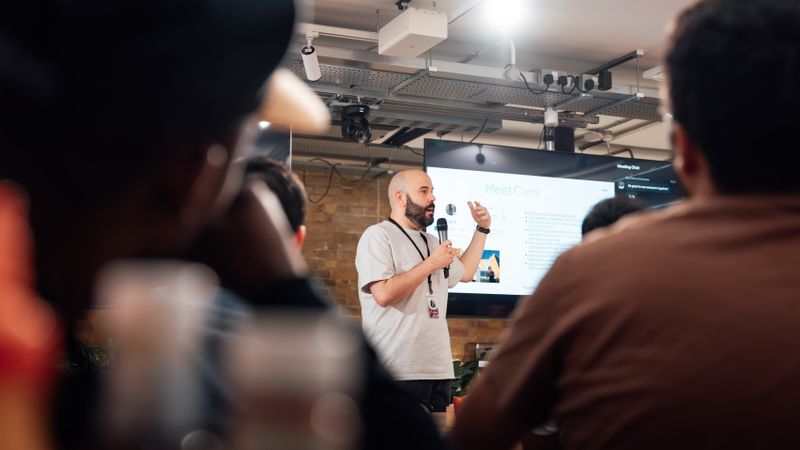
Avan Jogia Wants to Bring You Into His World

Avan Jogia has positioned himself at a deliberate crossroads in his career, consciously selecting projects that demand both personal creative investment and audience participation in immersive storytelling. The Canadian actor and filmmaker has gravitated toward two distinct productions, "Backrooms" and "56 Days," each representative of his evolving artistic philosophy that prioritizes experiential narrative over conventional entertainment frameworks. This strategic shift reflects a broader recalibration of Jogia's professional trajectory, moving away from the safety of established television franchises toward ventures that challenge both performer and viewer to engage with unconventional narrative structures and psychological depth. The projects represent not merely career choices but philosophical statements about what contemporary entertainment should aspire to achieve in an era of oversaturation and fragmented audience attention.
Jogia's trajectory through the entertainment industry has been marked by incremental shifts in creative autonomy and artistic ambition. Following his prominence in Nickelodeon's "Victorious" and subsequent television roles, the actor gradually expanded his presence behind the camera as well as in front of it, directing and producing content that reflected personal creative interests rather than commercial convenience alone. This evolution mirrors a broader industry trend wherein performers increasingly view acting roles as one component of multifaceted creative careers rather than the primary or sole focus. The timing of Jogia's emphasis on immersive storytelling proves particularly significant given contemporary audience skepticism toward traditional entertainment models, declining television viewership among younger demographics, and the rising cultural cachet of experimental and boundary-pushing content. His deliberate pursuit of projects prioritizing audience immersion demonstrates an understanding that creative relevance in the current landscape demands innovation in form as well as substance.
The specific nature of Jogia's selected projects reveals calculated choices aligned with emerging entertainment trends. "Backrooms," which exists within the creepypasta and internet folklore ecosystem, represents a genre consciously constructed around participatory worldbuilding and audience interpretation—viewers bring existing knowledge and expectation to the narrative rather than encountering a fully predetermined story. "56 Days," structured as a psychological thriller examining relationship dynamics and temporal complexity, similarly demands active viewer engagement with unreliable narrative construction and moral ambiguity. Both projects fundamentally reject the passive consumption model that has dominated mainstream entertainment for decades. Rather than presenting clearly delineated protagonists and antagonists with straightforward resolutions, these works require audiences to construct meaning collaboratively with the text, a demand that reflects shifting expectations among viewers who have grown accustomed to interactive and user-generated content ecosystems. The choice to pursue both simultaneously suggests Jogia recognizes synergistic potential in projects sharing this collaborative philosophical framework.
For entertainment industry professionals and observers, Jogia's strategic positioning carries immediate practical implications regarding content market dynamics and performer differentiation. As streaming platforms and independent production companies increasingly compete for audience attention through quantity and algorithm optimization, performers who align themselves with distinctive creative visions rather than generic blockbuster franchises establish more defensible long-term market positions. Jogia's embrace of immersive and experimental storytelling allows him to cultivate dedicated audience segments invested in his particular creative sensibility rather than generic brand extensions. This approach proves particularly valuable for actors navigating the mid-career transition from established television roles to sustained film and prestige television work, where differentiation becomes crucial for securing meaningful projects. Furthermore, by positioning himself as a director and producer simultaneously, Jogia reduces commercial dependence on others' casting decisions while building institutional relationships with production companies and platforms prioritizing innovative storytelling. This multi-platform creative positioning increasingly determines longevity and creative control in entertainment careers, making Jogia's choices representative of strategic acumen beyond mere talent assessment.
The broader pattern these projects illuminate extends beyond individual career management into fundamental restructuring of what constitutes commercially viable entertainment in the streaming era. Immersive storytelling, participatory narrative construction, and audience co-creation represent not niche experimental aesthetics but increasingly mainstream approaches to content differentiation. Major platforms including Netflix, Amazon Prime Video, and specialty streaming services have collectively demonstrated willingness to invest in unconventional narrative structures when they attract and retain engaged viewership, challenging decades of industry orthodoxy regarding storytelling conventions. Jogia's alignment with these emerging patterns positions him within a wider generational shift among creative professionals who view traditional television and film hierarchies as antiquated frameworks rather than desirable endpoints. This reflects broader cultural movement toward authenticity and directorial vision in an era when audiences actively seek out content bearing distinctive authorial signatures. The entertainment landscape increasingly rewards specificity and creative risk-taking over generic competence, a dynamic that fundamentally restructures which performers and projects receive institutional support and audience investment.
The immediate future developments warranting close observation include the critical and audience reception of both projects within their respective release windows and platforms, as these outcomes will substantially determine whether Jogia's gambit represents prescient career positioning or miscalculated artistic ambition. Streaming platform metrics surrounding viewer engagement with "Backrooms" and "56 Days"—particularly whether immersive narrative structures generate the sustained viewership and subscriber retention that platforms ultimately measure—will provide concrete data regarding market viability of Jogia's chosen aesthetic direction. Additionally, the projects' performance will likely influence greenlight decisions at major production companies regarding similar experimental storytelling approaches throughout 2024 and 2025, potentially accelerating broader industry movement toward audience-participatory content models or alternatively signaling market saturation with unconventional narrative structures. Observers should particularly track whether these projects generate sufficient cultural conversation and industry recognition to elevate Jogia's profile beyond the performer category into recognized filmmaker status, as such elevation would validate his multi-creative-platform strategy and potentially inspire similar positioning among other established television actors seeking sustained relevance in evolving entertainment markets.